
A coffee spill on carpet in a West Palm Beach condo, a Boca Raton rental, or a family room in Wellington can look harmless for a minute, then turn into a brown ring that keeps coming back. If you need to know how to clean spilled coffee on carpet, the right move depends on three things right away, how fresh it is, whether it was black coffee or a milk drink, and what kind of carpet you're dealing with. In South Florida, humidity and AC airflow can make that spill set faster than you expect.
Table of Contents
- What a Spilled Coffee on Carpet Really Looks Like in a Palm Beach Home
- The First 60 Seconds After a Coffee Spill
- Tackling Dried and Set-In Coffee Stains
- Fiber-Specific Cautions That Change the Method
- When the Real Problem Is Moisture, Not the Stain
- When to Stop DIY and Call a Professional
- Quick Answers for Common Coffee Spill Questions
What a Spilled Coffee on Carpet Really Looks Like in a Palm Beach Home
A fresh spill in a Palm Beach County home usually starts as a dark puddle, then turns into a soft-edged shadow if somebody waits too long or reaches for the wrong towel. On light beige carpet, especially in condo living rooms and Airbnb units, coffee can wick outward as it dries, and the ring is often more noticeable than the original spill. That's why how to clean spilled coffee on carpet is really a decision tree, not a single recipe.
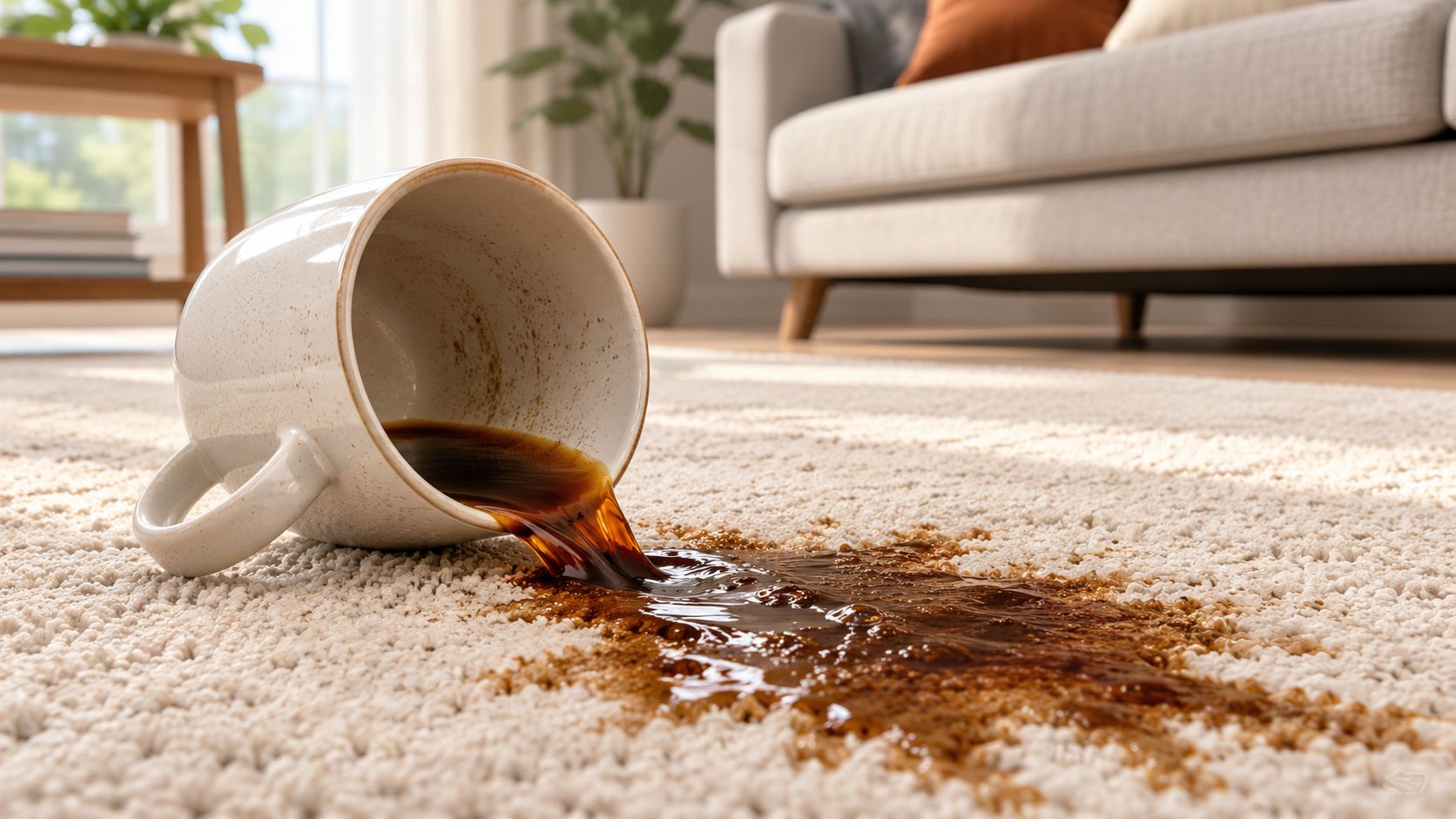
The three questions that matter first
The stain behaves differently if it's fresh or dried, if it came from black coffee or a milk drink, and if the carpet is wool, synthetic, or unknown. Coffee contains tannins that bond to fibers as the liquid dries, which is why the first minutes matter most, and why a spill that sat overnight acts nothing like one you caught at the counter.
In South Florida homes, there's another wrinkle. Humidity slows drying, sand gets ground into entryway carpet, and AC airflow can pull moisture toward the edges of the spot, making the stain look larger the next day.
Practical rule: if the spill is still wet, your job is to remove liquid before it binds deeper into the fibers. If it's already dry, the job shifts to loosening residue without over-wetting the backing.
A black coffee spill is mostly a pigment problem. A latte or cappuccino adds proteins and sugars, which means you're dealing with both staining and residue, and that changes the cleanup order.
The First 60 Seconds After a Coffee Spill
The first move is simple, grab a clean white cloth or white paper towels and blot the spill right away. Cleaning guides consistently say to blot, not scrub, and to work from the outside of the stain inward so the coffee doesn't spread. That direction matters more than whatever product you reach for first.
What to grab and what to skip
Keep the response calm and basic:
- Clean white cloths or paper towels: White is safest because colored rags can transfer dye.
- A small spray bottle: One published method uses 1 teaspoon of dish soap in a 25 oz spray bottle of water and lets it sit for a couple of minutes before extraction (Flooring America).
- Plain water: Good for rinsing after treatment.
- A wet/dry vacuum if you have one: Helpful for pulling out loosened moisture after cleaning.
Avoid a few common mistakes. Don't scrub, because friction can fray fibers and drive tannins deeper. Don't reach for bleach. If milk or cream was involved, hot water is a bad idea because it can set the protein mess instead of lifting it.
Blot, lift, switch to a dry section of the towel, then blot again. If the towel keeps pulling up brown liquid, keep going until it's transferring far less.
For many fresh spills, the immediate win is removing as much liquid as possible before it settles into the pile. If you've got a dry towel, you can even press it on the spot for a few minutes after blotting to keep drawing up moisture.
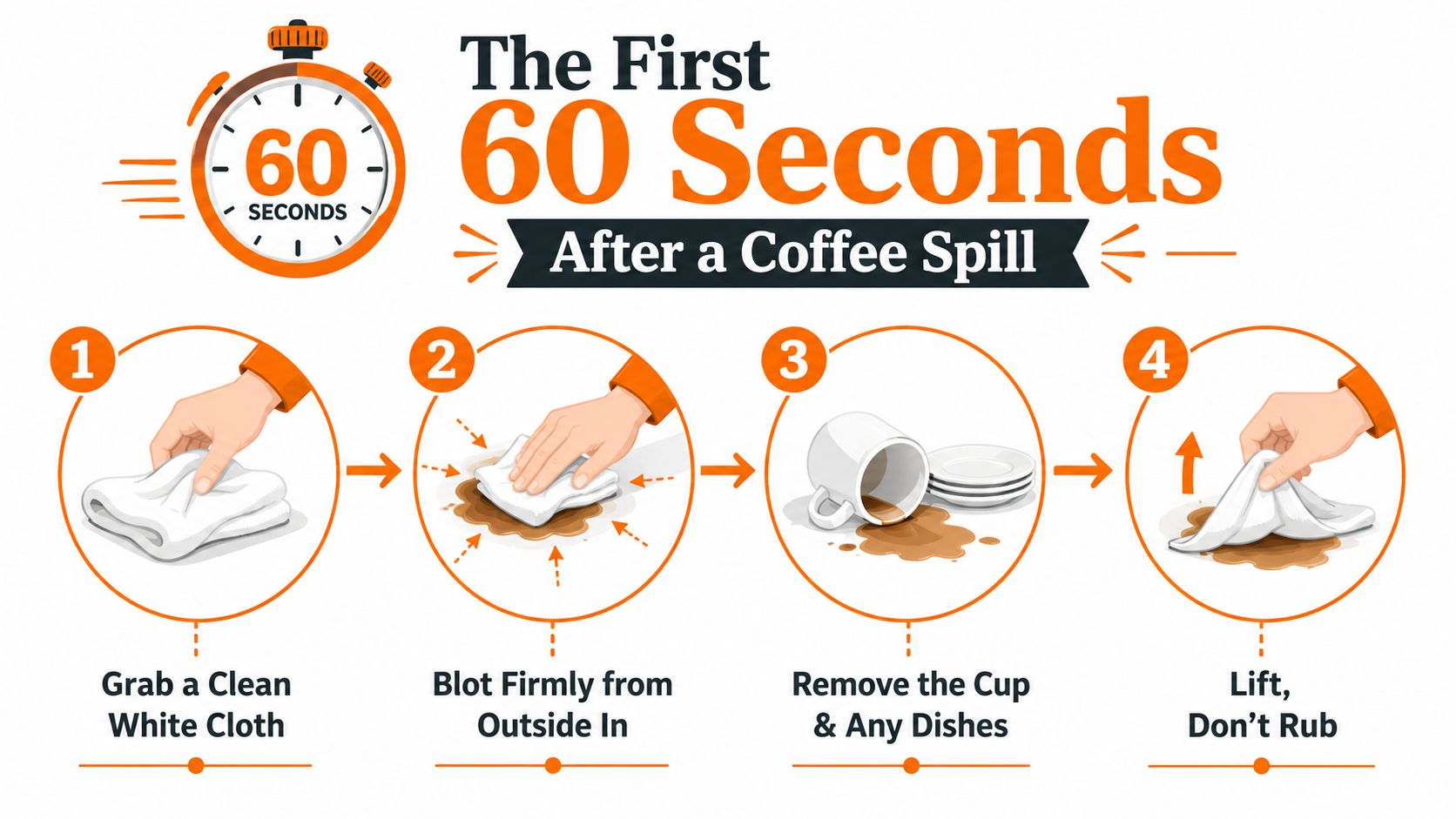
A fresh spill that gets handled fast often never turns into a stain at all. Once the liquid is gone, you can decide whether it needs a light treatment or whether you're already in set-in-stain territory.
Tackling Dried and Set-In Coffee Stains
Once coffee has dried, been stepped on, or sat there overnight, the method changes. The safest homeowner mix most guides keep returning to is 1 tablespoon dish soap + 1 tablespoon white vinegar + 2 cups warm water, applied with a cloth, not poured on the carpet. The cloth matters because it keeps you from flooding the backing.
A measured DIY route that actually makes sense
Use the solution on the visible stain, then let it sit for 5-10 minutes before blotting and rinsing with cool water. That short dwell time gives the cleaner time to break down residue without soaking the carpet too long. A similar smaller mix also appears in homeowner guides, 1/2 teaspoon dish soap + 1/2 teaspoon white vinegar + 2 cups water, and the point is the same, measured ingredients beat guesswork.
For a commercially packaged option, a carpet-cleaning guide recommends an oxy-based cleaner for 30 seconds on lightly soiled areas and up to 5 minutes on heavily soiled areas before blotting and repeating if needed (Lavazza). That approach works because older stains need a little dwell time to loosen, then extraction to carry the residue away.
Why stains come back after the first pass
The biggest DIY failure is incomplete rinsing. If soap stays in the fibers, it can attract new dirt, and if coffee residue stays behind, the stain can reappear as the carpet dries. That's why the sequence should be blot, treat, wait briefly, blot again, then rinse and dry.
Hydrogen peroxide sometimes shows up as a second-line option, but it's mainly for light carpet and should be tested in a hidden spot first. One cleaning expert also notes that 3% hydrogen peroxide alone may be too weak for some older stains, and severe stains can need much longer dwell time before they visibly improve (YouTube cleaning expert clip).
For another stubborn spill example, see how to get curry stain out, because the same residue problem shows up with other colored liquids.
Fiber-Specific Cautions That Change the Method
The same coffee spill doesn't behave the same way on every carpet. Wool, synthetic carpet, and unknown older carpet all react differently to water, vinegar, and peroxide, so the safest first step isn't always the strongest cleaner.
Safe Treatments by Carpet Type
| Carpet Type | Best First Response | Avoid | Test Before Treating |
|---|---|---|---|
| Wool or wool blend | Water-only blot first, then very light treatment if needed | Heavy soaking, aggressive peroxide | Yes, on a hidden corner |
| Solution-dyed synthetic, like polyester or nylon | Blot, then a measured soap-and-vinegar mix | Scrubbing and over-wetting | Yes, especially on lighter shades |
| Unknown or older carpet | Start with water-only blotting if the dye is uncertain | Strong oxidizers until you know how it reacts | Absolutely, wait about 5 minutes and check for color change |
What changes the risk level
Wool can look fine at first and still react badly if you overdo the cleaner. Solution-dyed synthetics are usually more forgiving, but that doesn't mean they're bulletproof, especially if the stain has already dried. Unknown carpet is the one I treat with the most caution, because a wrong chemical can create a bigger discoloration than the coffee did.
If you don't know the fiber, do the smallest possible test in a closet edge or behind furniture, then wait and check for color shift, fuzzing, or dullness.
A useful comparison lives in another cleaning context too, how to clean microfiber couch, because upholstery and carpet both punish over-wetting and rushed chemistry. For coffee on carpet, the decision is simple, start mild, test first, and only escalate if the fabric can take it.
When the Real Problem Is Moisture, Not the Stain
Sometimes the visible ring is only half the problem. Coffee can soak into the pile, pad, or rug underlayer, and in South Florida that trapped moisture can turn into a lingering smell fast. Too much water is its own risk, one published carpet guide specifically warns not to soak the area because excess water can damage the backing (Katie on the Spot).
How to tell if the spill is still trapped below
Touch the area with a dry hand and press a clean towel down on it. If it feels cool, heavy, or keeps transferring moisture long after the surface looks better, the spill may still be below the carpet face. Odor is another clue, especially if milk or cream was involved, because that adds sourness that plain coffee doesn't leave behind.
The fix is controlled drying, not repeated flooding. Use fans, keep the AC running, and place a weighted dry towel on the spot so it keeps pulling moisture up. Open nearby doors if the room feels stale, because trapped humidity slows everything down.
Warning signs that point to a deeper problem
- The spot feels damp hours later.
- A smell returns after it dries.
- The edge wicks again after cleaning.
- The carpet backing feels stiff or crunchy.
For deeper odor issues, I'd rather use a careful extraction approach than keep adding liquid. A good example of what odor-trapped carpet can look like is covered in how to remove vomit smell from carpet, because the moisture problem is often the primary problem, not the stain color.
When to Stop DIY and Call a Professional
If the stain darkens after a second attempt, stop. If the smell comes back, or you see wicking around the edges, the carpet probably needs extraction instead of another round of spot cleaning. That's especially true for wool, high-value carpet, or a move-out where the deposit is on the line.
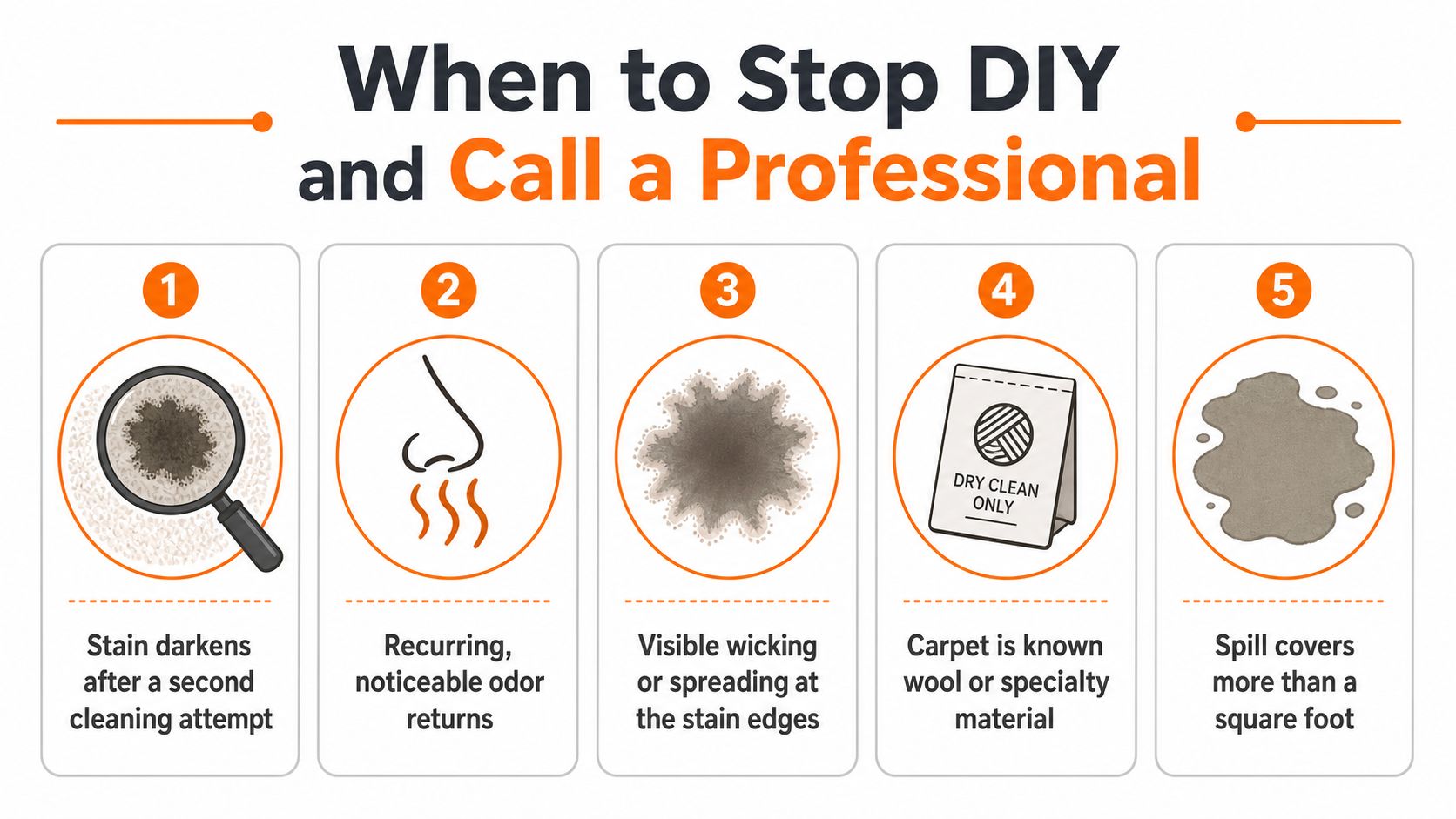
The situations that justify handing it off
- The stain got worse after treatment: That usually means residue or dye spread.
- The odor keeps coming back: Hidden moisture or milk residue may be sitting deeper in the carpet.
- The carpet is specialty material: Wool and other delicate fibers deserve a safer approach.
- It's a turnover job: Airbnb and rental timelines in places like Juno Beach and Boca Raton don't leave room for trial and error.
- You're already past the first attempt: More DIY can mean more wicking, not less.
In West Palm Beach move-outs, landlords usually care about the same things every time, clean kitchen, clean bathroom, clean floors, and no visible carpet marks at the final walkthrough. If the coffee spill landed in a place where guests, tenants, or an agent will inspect it within hours, it's smarter to book help than gamble on another patch of vinegar.
Keep a small stain kit near the coffee maker, blot before you chase the cup, and get the carpet professionally cleaned after any spill that soaked down into the pad.
Quick Answers for Common Coffee Spill Questions
If it was milk or cream, rinse first with cool water, then treat the stain, because the protein and sugar residue can sour if you skip that step. A weighted dry towel can stay on the area while it dries, but don't trap the carpet under anything wet. A hairdryer on high heat isn't a good idea, and it's usually safer to walk on the spot again only after it's fully dry.
If coffee hit your carpet and you want it handled before the stain sets or the smell comes back, Sunset Shine Home Cleaning can help with thorough carpet-safe cleaning and fast turnaround support for busy homes, rentals, and turnovers. Book your cleaning with Sunset Shine Home Cleaning, your trusted house cleaning service in West Palm Beach, or call 561-408-4020 for service across Palm Beach County.