
You're probably reading this because your shower looked fine a few days ago, and now the glass is hazy, the corners look dark, and the tub has that dull film that never seems to rinse away. In Palm Beach County, learning how to clean shower and tub surfaces isn't the same as following generic advice written for drier climates. Humidity hangs around, bathrooms stay damp longer, and homes near Jupiter, Juno Beach, and Boca Raton often deal with extra residue on fixtures from coastal air.
At Sunset Shine Home Cleaning, this is the bathroom mess we see over and over in West Palm Beach, Palm Beach Gardens, Delray Beach, and the rest of the county. The goal isn't just to scrub harder. It's to use the right method, on the right surface, early enough that buildup doesn't turn into a weekend project.
Table of Contents
- The South Florida Bathroom Battle You Know Too Well
- Your Palm Beach County Cleaning Arsenal
- The Pro-Level Cleaning Method Step by Step
- Targeting Stubborn Grout, Grime, and Buildup
- How to Maintain That Sunset Shine Clean Longer
- When to Call for Backup in West Palm Beach
The South Florida Bathroom Battle You Know Too Well
You step into the bathroom on a July morning, and the shower already feels damp from the night before. The glass has a cloudy cast. The grout near the floor looks a shade darker than it did last week. The tub ring is faint, but it is there. In Palm Beach County, that buildup starts early and hangs on because heat, humidity, and hard water keep feeding it.
We see it all over the county at Sunset Shine Home Cleaning. In West Palm Beach condos, bathrooms often have limited airflow and moisture stays trapped after every shower. In older Lake Worth homes, grout and caulk tend to hold onto dampness longer. Closer to the coast, fixtures can lose their shine fast, and salt in the air does them no favors.
The pattern is predictable. A shower does not have to look filthy to already be harder to clean.
What local bathrooms keep teaching us
The mistake is waiting for obvious grime. By the time the shower floor looks dingy or the glass looks fully spotted, soap residue has mixed with minerals, mildew has settled into textured grout, and caulk lines need detail work instead of a routine wipe-down.
South Florida changes the timeline. Advice that works in a drier climate often assumes the room dries out on its own after use. Here, that gap between clean enough and problem started is short, especially in summer and rainy season.
That is why prevention matters more than catch-up cleaning.
A better approach is to treat moisture as the key trigger. If you stay ahead of damp grout, standing droplets, and product residue, you avoid the heavy scrubbing phase that wears on finishes and eats up your weekend. If you need help choosing a safer cleaner before buildup gets out of hand, our guide to the best product to clean shower surfaces breaks down what makes sense for different materials.
What doesn't work here
A wait-and-see routine usually fails in Palm Beach County. So does using one harsh cleaner on every surface and hoping elbow grease will solve the rest. That approach can leave acrylic dull, irritate grout, and still fail to clear the haze on glass.
What holds up here is early maintenance with the climate in mind. Dry the surfaces that stay wet. Vent the room longer than you think you need to. Clean the shower before the film turns into buildup. That is the difference between a quick weekly job and a bathroom that always feels like it is one humid day away from slipping backward.
Your Palm Beach County Cleaning Arsenal
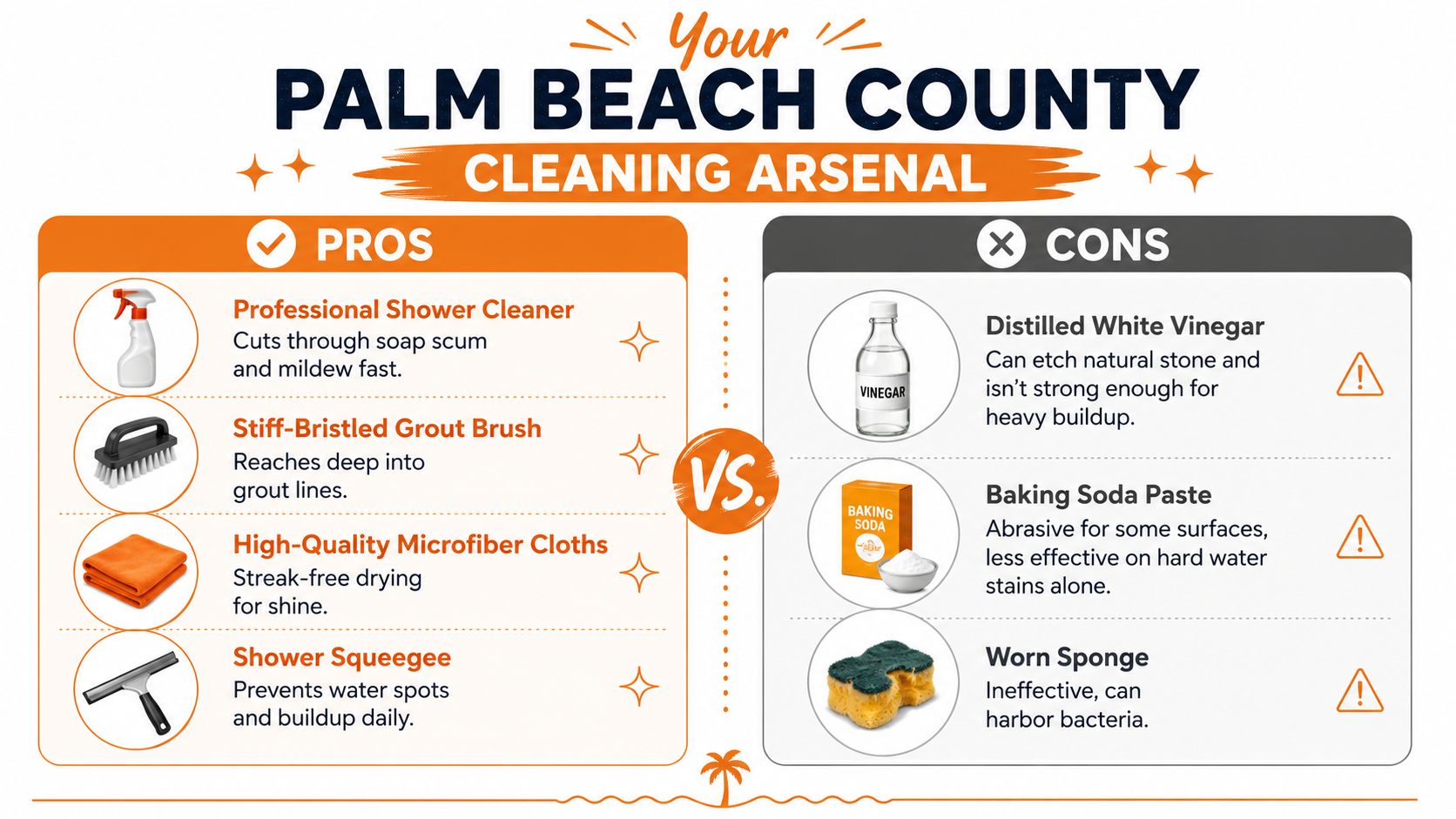
A good shower clean starts before the first spray bottle comes out. The wrong tool can leave scratches on an acrylic tub, dull a fiberglass surround, or create permanent problems on natural stone. That's why surface safety matters more than most online checklists admit.
Start with the tools that actually help
These are the items that earn their keep in real bathrooms:
- Microfiber cloths for drying and polishing. They lift residue better than old towels and leave less lint behind.
- A non-abrasive sponge or soft scrub pad for tubs, shower walls, and smooth tile.
- A grout brush with firm bristles for seams, corners, and textured grout lines.
- A squeegee for glass doors and smooth tile walls.
- A spray cleaner matched to the surface instead of one harsh product for everything.
- Gloves and ventilation because enclosed bathrooms trap fumes fast.
If you want a more product-specific breakdown, our guide on the best product to clean shower surfaces lays out what makes sense for different materials.
Match the cleaner to the surface
One of the biggest mistakes in bathroom cleaning is assuming strong always means effective. It doesn't. Compatibility is the core issue. Guidance on shower care consistently warns that abrasive cleaners and strong acids can permanently damage finishes, so the cleaner has to fit the material, especially on acrylic, fiberglass, porcelain, tile, or stone, as noted in Seventh Generation's shower cleaning guidance.
Here's the field version:
| Surface | Safer approach | Avoid |
|---|---|---|
| Acrylic tub | Non-abrasive cleaner, soft sponge, microfiber | Abrasive powders, stiff pads |
| Fiberglass surround | Gentle bathroom cleaner, light agitation | Harsh scouring, rough brushes |
| Porcelain tub | Surface-safe bathroom cleaner, grout brush around edges | Overusing abrasives on the finish |
| Natural stone tile | Stone-safe cleaner only | Vinegar, acidic descalers |
| Glass shower doors | Daily squeegee, surface-safe glass cleaner | Letting minerals dry in place repeatedly |
If you don't know the material, test the cleaner on a small hidden spot before doing the whole shower.
One practical option some homeowners use is a recurring maintenance service like Sunset Shine Home Cleaning for bathrooms that keep rebounding due to humidity, while handling light in-between wipe-downs themselves.
The Pro-Level Cleaning Method Step by Step
The fastest way to waste effort is spraying cleaner onto a dry, cluttered shower and scrubbing immediately. Pros don't clean that way. The order matters because each step makes the next one easier.
Prep first so you're not fighting clutter
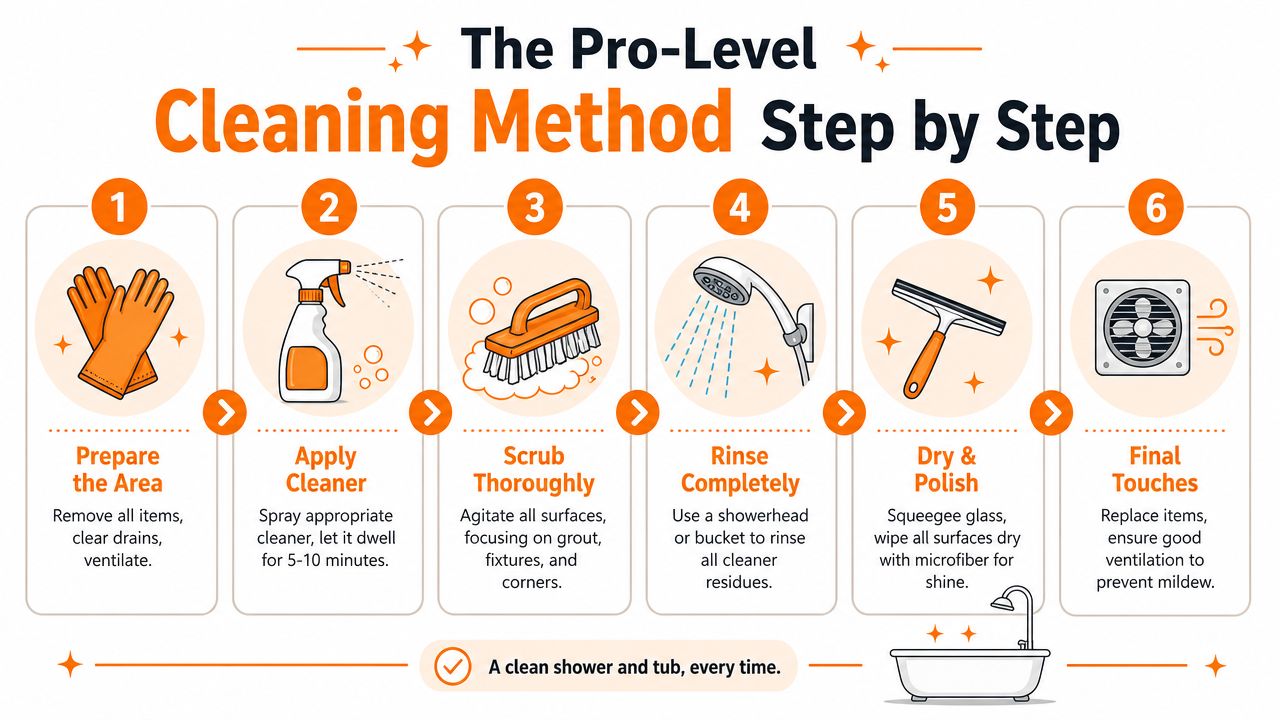
Remove shampoo bottles, razors, bath toys, and soap trays. Clear hair from the drain. Open a window if the bathroom has one, or run the exhaust fan before you start.
Then pre-rinse the shower and tub with warm water. That softens fresh residue and helps the cleaner spread more evenly across the surface instead of sitting in streaks.
Use dwell time instead of brute force
A strong cleaning workflow is pre-rinse, apply cleaner, allow dwell time, scrub, then rinse and dry. Professional guidance recommends letting cleaner sit for about 5 to 10 minutes so it can loosen soap scum and biofilm before you scrub, as outlined in this bathtub and shower cleaning workflow.
That one habit changes the whole job. If you spray and scrub immediately, you're doing all the work mechanically. If you let the cleaner sit, you give it time to break the grime's grip on the surface.
For tub buildup specifically, this is why a targeted method works better than random scrubbing. Our walkthrough on how to get soap scum off of bathtub surfaces goes deeper on that part.
Use this sequence:
- Spray from top to bottom so runoff works with you.
- Let the cleaner dwell while you wipe bottles and rinse removable items.
- Scrub in sections using circular motions on walls, corners, and the tub basin.
- Use the grout brush on seams, floor edges, and around fixtures.
A quick visual helps if you want to follow the process in order:
Rinse and dry like it matters
Rinse thoroughly so cleaner residue doesn't dry back onto the surface. In South Florida bathrooms, drying is not optional if you're trying to slow mildew and water spotting. Wipe down metal fixtures, tub edges, and glass with microfiber. Use a squeegee on doors and smooth wall tile.
Clean from the top down. If you scrub the tub first and then rinse dirty walls over it, you've just made yourself do the same work twice.
Targeting Stubborn Grout, Grime, and Buildup
Palm Beach County showers collect three kinds of trouble fast. Soap scum sticks to lower wall sections and tub sides. Hard water leaves a cloudy film on glass and fixtures. Grout and caulk hold moisture longer than the tile around them, so discoloration often starts there first.
Soap scum is layered residue
That dull gray film is a mix of soap, body oil, and mineral residue. In South Florida, humid air slows drying time, which gives that film more time to cling and harden on shower walls, doors, and tub surrounds.
The fix is contact plus friction. Wet the surface first, apply enough cleaner to keep it coated, then scrub with a non-abrasive pad after the product has had time to work. If you go in too soon, you end up pushing residue around instead of lifting it.
A few mistakes make this job harder than it needs to be:
- Using a worn-out sponge that smears buildup instead of cutting through it
- Scrubbing a dry surface before the cleaner loosens the film
- Treating old buildup like fresh residue and expecting one pass to solve it
Hard water haze needs product discipline
Mineral haze is a different problem from soap scum, even when they show up on the same surface. On glass, it can look like a cloudy cast. On chrome and brushed nickel, it leaves spotting that comes right back if the fixture dries on its own.
Stronger acidic products can cut mineral deposits faster. They can also dull the wrong finish or damage natural stone. That trade-off matters in bathrooms with mixed materials, which is common in newer remodels across West Palm Beach and Palm Beach Gardens.
Keep these jobs separate. Clean glass with a product meant for mineral film. Clean fixtures with something safe for the finish. Clean tile based on the tile and grout type, not whatever cleaner happens to be in your hand.
Grout and caulk show the real condition of the shower
A shower can look fine at eye level and still be losing the battle at the floor line. That is where we usually find the first dark grout joints, mildew in corners, and staining along the tub seam. Once moisture settles into textured grout or aging caulk, the job stops being a simple wipe-down.
Regular attention beats aggressive scrubbing here. Work grout lines with a dedicated grout brush, especially at corners, curb edges, and where the wall meets the tub or pan. If staining is already set in, our guide on how to clean grout in bathroom tiles walks through the detail work.
Caulk needs a different judgment call. Surface mildew can often be cleaned. Caulk that stays black, splits, pulls away, or feels soft usually needs replacement, not more product.
Grout doesn't need heroic scrubbing. It needs steady attention before South Florida moisture turns light staining into a permanent-looking problem.
How to Maintain That Sunset Shine Clean Longer
You finish a shower in West Palm Beach, and by the next morning the glass already has spots again, the corners still feel damp, and the tub line is starting to look dull. That is normal here. In Palm Beach County, maintenance is less about keeping a bathroom perfect and more about staying ahead of moisture, mineral residue, and the first signs of mildew before they settle in.
The best routine is short and repeatable. If it takes too long, people stop doing it. In our climate, that usually means buildup gets a head start.
The daily reset that saves the weekly clean
A quick reset right after showering does more than make the room look better. It interrupts the cycle that turns a clean shower into a scrubbing job by the weekend.
Use a squeegee on glass and tile while the surfaces are still wet. If you prefer a daily shower spray, apply it right away so it lands on fresh residue instead of dried film. That timing helps reduce soap scum, water spotting, and the mildew staining that shows up fast in humid bathrooms around Boynton Beach, Wellington, and Royal Palm Beach.
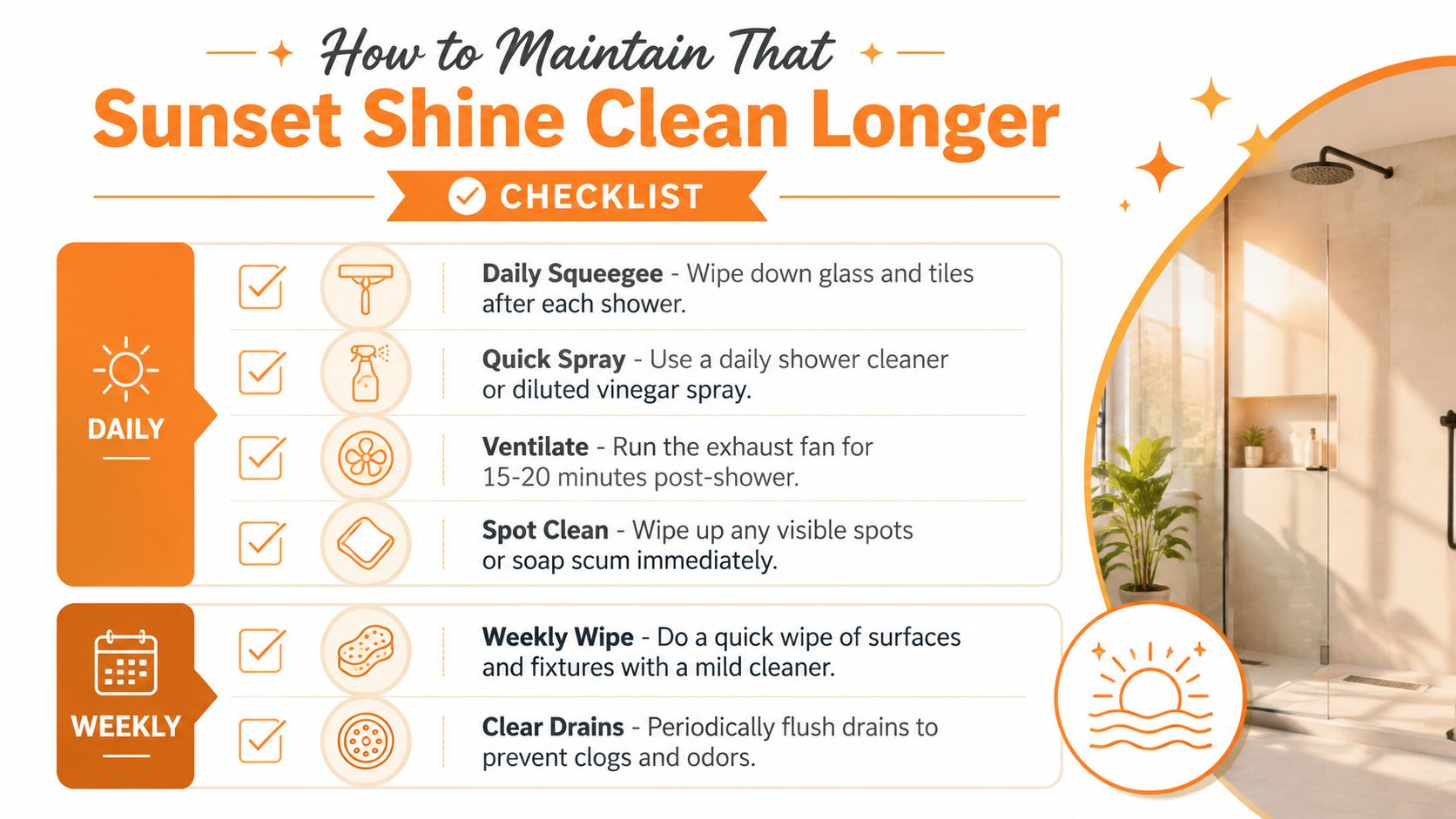
One more step matters in South Florida. Run the exhaust fan for a while after the shower, and leave the door or curtain open enough for the space to dry. A lot of bathrooms lose the battle because the surfaces were cleaned, then sealed back into humidity.
A realistic maintenance rhythm
A good maintenance plan should match real life, not an ideal schedule nobody follows.
After each shower
Squeegee or spray: Clear water from glass, tile, and fixtures before minerals dry in place.A few times a week
Check the problem zones: Look at the tub seam, corners, and the floor line. Those areas usually show trouble first.Once a week
Do a quick full wipe-down: Clean the shower floor, tub surface, faucet bases, and visible edges before residue thickens.During your deeper clean
Dry the room out on purpose: Use the fan, open the space up, and let the bathroom finish dry instead of trapping moisture again.
This is the trade-off I see in South Florida homes all the time. Skip a two-minute reset after each shower, and the weekly clean gets longer fast. Keep moisture under control, and you spend less time fighting hard water film, mildew shadows, and that dingy ring that forms around the tub.
When to Call for Backup in West Palm Beach
A shower can look passable from the doorway and still be losing the fight in the spots that matter. In West Palm Beach bathrooms, I usually see the trouble hiding in grout lines, along the tub seam, around fixture bases, and on the lower tile where moisture sits every day.
That is usually the point where outside help saves time and frustration.
If soap scum has hardened into layers, hard water marks are no longer lifting with a standard scrub, or mildew keeps returning at the caulk line, the job has moved past a quick weekend reset. The same goes for rental turnovers, move-outs, and guest prep. In Palm Beach County, buildup happens fast enough that waiting another week can turn a manageable clean into a restoration-style job.
Delray Beach move-outs and Boynton Beach vacation rentals are a good example. The bathroom may look clean under bright lights and still fail close inspection. Humidity leaves its signature in corners, grout joints, and around the base of the tub, especially in homes where the shower stays damp for hours after use.

What a service visit usually includes
In most West Palm Beach area appointments, clients are not asking for a theory lesson. They want the bathroom reset to a workable standard, with the obvious problem zones handled before they spread. That usually includes:
- Bathrooms with focused cleaning on tubs, showers, sinks, mirrors, toilets, and visible buildup
- Kitchen wipe-downs including counters, cabinet exteriors, sinks, and fixtures
- Floors and baseboards where sand, dust, and hair collect fast in South Florida homes
- Window sills and high-touch areas that often get skipped during rushed cleanups
- Add-ons when needed like inside the oven, fridge, cabinets, wall spot cleaning, or extra pet-hair attention
The process stays simple. Schedule, Clean, Inspect, Enjoy. You book online or by phone, get a confirmation window, and the cleaners arrive with supplies and work from a checklist. After a quick quality check, the home is ready to use again.
Pricing usually depends on bedrooms, bathrooms, square footage, current condition, and any add-ons.
South Florida climate is a significant reason many homeowners call for help. What works in a drier market often falls short here. A bathroom can be cleaned correctly and still slide backward fast if hard water and humidity have already settled into the surfaces.
If you'd rather skip the scrubbing and get a bathroom that's reset for South Florida living, book with Sunset Shine Home Cleaning. We help homeowners, renters, Airbnb hosts, and property managers across West Palm Beach, Palm Beach Gardens, Jupiter, Juno Beach, North Palm Beach, Riviera Beach, Royal Palm Beach, Lake Worth, Boynton Beach, Delray Beach, Boca Raton, Wellington, Westlake, Loxahatchee, Loxahatchee Groves, and The Acreage. Call 561-408-4020 or book online for a cleaning that handles the humidity, buildup, and bathroom grime that keep coming back.