
Keeping a home clean can feel like a constant battle, especially when your brain is wired for anything but routine chores. In Palm Beach County, that challenge gets amplified by bathroom mildew from humidity, salt film on coastal fixtures, sand tracked in after a Juno Beach run, and AC dust settling on vents and sills year-round. This practical adhd cleaning list is built for real South Florida homes, with strategies that reduce overwhelm, create visible finish lines, and help you decide when it makes more sense to hand the work to a local pro.
If you're staring at dishes, laundry, sticky counters, and a bathroom that seems to mildew overnight, start small. The most effective systems for ADHD answer three questions at once: where do I start, how long should this take, and when am I done, as explained in this ADHD cleaning checklist guide.
Table of Contents
- 1. The Time-Boxing Method
- 2. The Checklist-Based Simplified System
- 3. The Zone Rotation System
- 4. The Minimal Supplies & Visual Organization Method
- 5. The Visual Environment Reset
- 6. The Habit Stacking & Anchor Routine Method
- 7. The Outsourcing & Professional Service Strategy
- 7-Method ADHD Cleaning Comparison
- The Smartest ADHD Cleaning Hack? Knowing When to Ask for Help.
1. The Time-Boxing Method
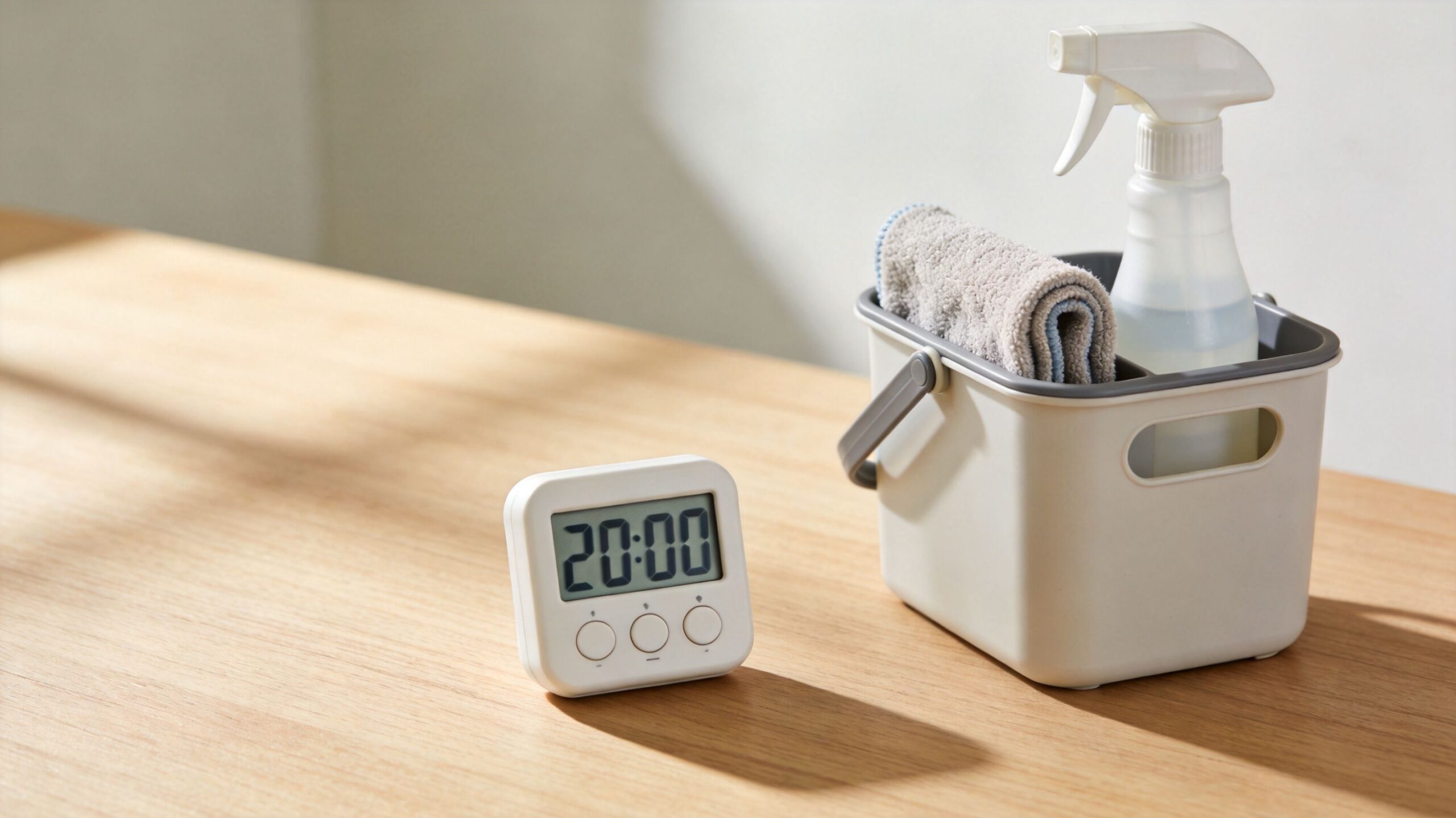
At 7:10 p.m., the kitchen still has sand near the back door, the bathroom mirror is spotted from the day's humidity, and the thought of "clean the house" is already too big. Time-boxing works because it replaces that vague pressure with a finish line you can see.
For ADHD brains, starting is usually the hardest part. A short timer lowers the entry cost. You are not committing to a full reset. You are committing to one block of effort, then you stop or decide again.
In Palm Beach County homes, that matters. Humidity keeps bathrooms feeling grimy faster. Salt air leaves a film on surfaces near windows and sliders. Sand shows up in entryways, bathrooms, and grout even when everyone swears they took their shoes off.
Use the clock, not your mood
A useful adhd cleaning list gives you a task and a limit. "Wipe the mirror for 5 minutes" works better than "clean the bathroom." "Sweep the entry tile for 10 minutes" is easier to start than "fix the whole first floor."
Practical rule: Choose the next 10 minutes, not the whole job.
I usually recommend this pattern:
- Set one short sprint: Start with 10 or 15 minutes.
- Pick one hotspot: Bathroom vanity, kitchen counters, or the area by the front door.
- Use an external cue: A phone timer, visual timer, or one playlist track.
- End cleanly: Stop when the timer ends, reset, then decide whether you have one more round in you.
That last step matters more than people think. Many ADHD clients either overcommit and burn out, or stop for a break that turns into the rest of the night. A defined stop keeps the task from feeling endless. A defined break keeps the pause from swallowing your momentum.
This method also helps you match effort to the actual problem. In South Florida, a 10-minute bathroom reset done three times a week often works better than waiting for one exhausting deep-clean day. The trade-off is simple. You will not get perfection in one session, but you will keep humidity-heavy spaces from tipping into overwhelm.
If a room has gone past what a timer can realistically fix, that's useful information, not failure. It may mean you need a separate decluttering session, a deeper scrub, or outside help for the reset. For many busy Palm Beach households, the smartest move is using time-boxing for daily upkeep and calling in a local service like Sunset Shine when buildup, grime, or whole-home catch-up has outgrown your available bandwidth.
2. The Checklist-Based Simplified System
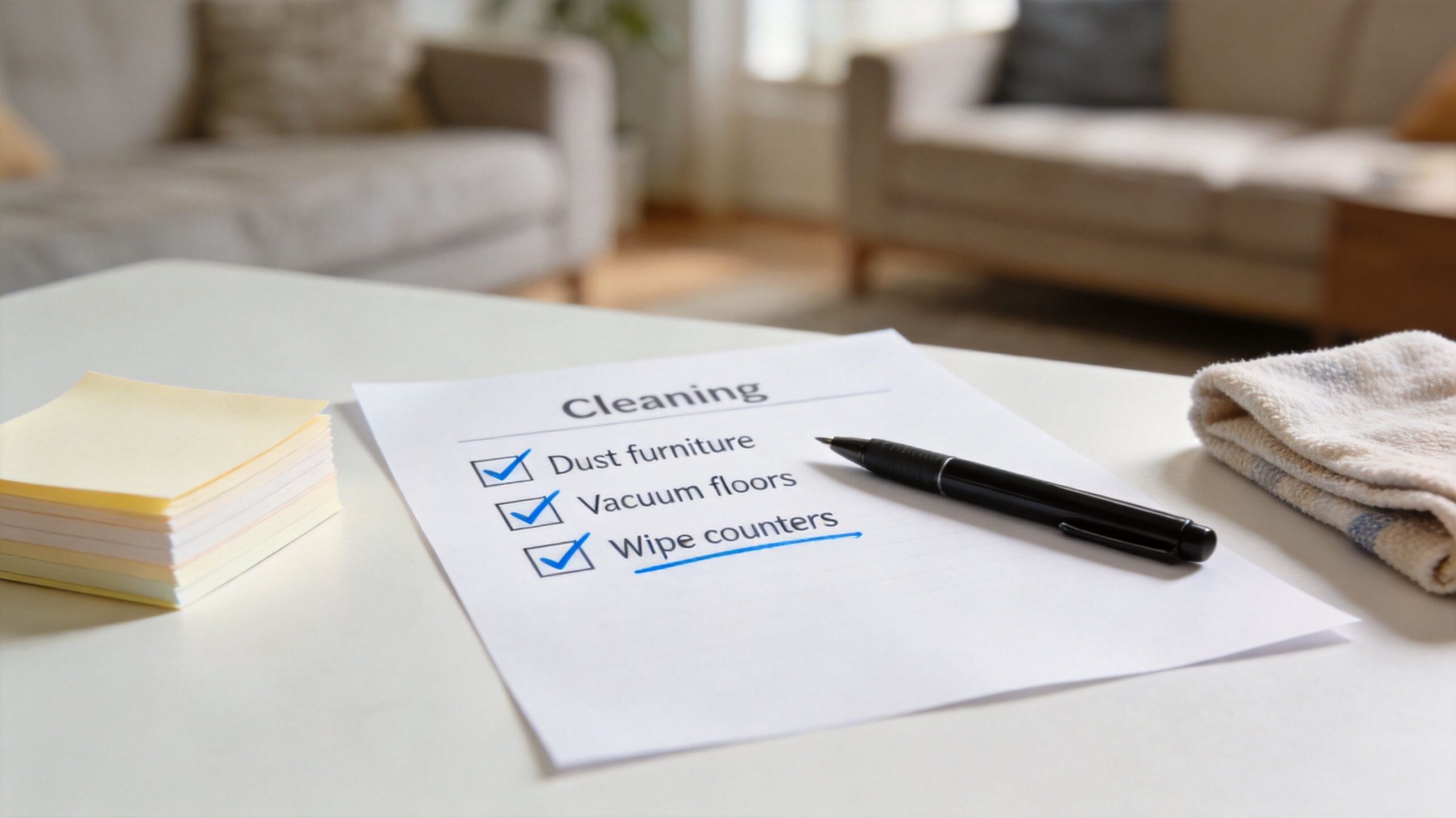
You walk into the bathroom to do a quick tidy, notice the mirror, spot toothpaste in the sink, remember the towels need changing, then leave with nothing fully finished. That pattern is common with ADHD. The problem usually is not effort. It is too many decisions packed into one vague instruction.
Executive function barriers, which make it harder to decide, estimate time, and stay with a boring task, are a common challenge with ADHD. A good checklist reduces that friction by removing the need to choose the next step in the moment.
Short and literal wins here.
Write tasks the way your brain can finish them
"Clean kitchen" asks for planning, sequencing, and stopping judgment all at once. "Load dishwasher" gives you one visible finish line. "Wipe stove" does the same. So does "Sweep under table."
The best checklist item has one action, one location, and a clear endpoint.
I recommend listing tasks in the order your body will move through the room. That cuts down on bouncing around, which is where many people lose momentum.
- Bathroom: Clear counter, spray mirror, wipe mirror, wipe sink, scrub toilet, replace towel
- Kitchen: Put food away, load dishwasher, wipe counters, wipe stove, shake mat, sweep
- Bedroom: Put clothes in hamper, make bed, clear nightstand, dust dresser, vacuum open floor
Palm Beach County homes need this level of specificity. Humidity keeps bathrooms damp longer. Sand collects near sliders and entryways. Salt air leaves a film on glass, fixtures, and window sills, especially in coastal neighborhoods. If those surfaces are not named on the list, they tend to get skipped until the room feels off again and the reset feels bigger than it is.
There is a trade-off. A shorter checklist will not cover every detail. That is the point. Daily or near-daily lists should stabilize the space, not chase perfection. For many households, a simple reset list works better than a giant whole-home printable that turns into visual clutter on its own.
If your checklist keeps getting ignored, the list is probably still too ambitious. Cut it down to five or six tasks for the room that causes the most stress. Once that routine sticks, add one local pain point such as wiping the bathroom vent cover, sweeping sand by the door, or cleaning the faucet where mineral spots show up fast.
And if the list only handles surface mess while buildup keeps returning, that is useful information. It usually means the maintenance system is fine, but the home needs a stronger reset underneath it. In Palm Beach homes with moisture, grit, and busy schedules, that is often the point where professional help from a local company like Sunset Shine makes more sense than asking yourself to catch up all at once.
3. The Zone Rotation System
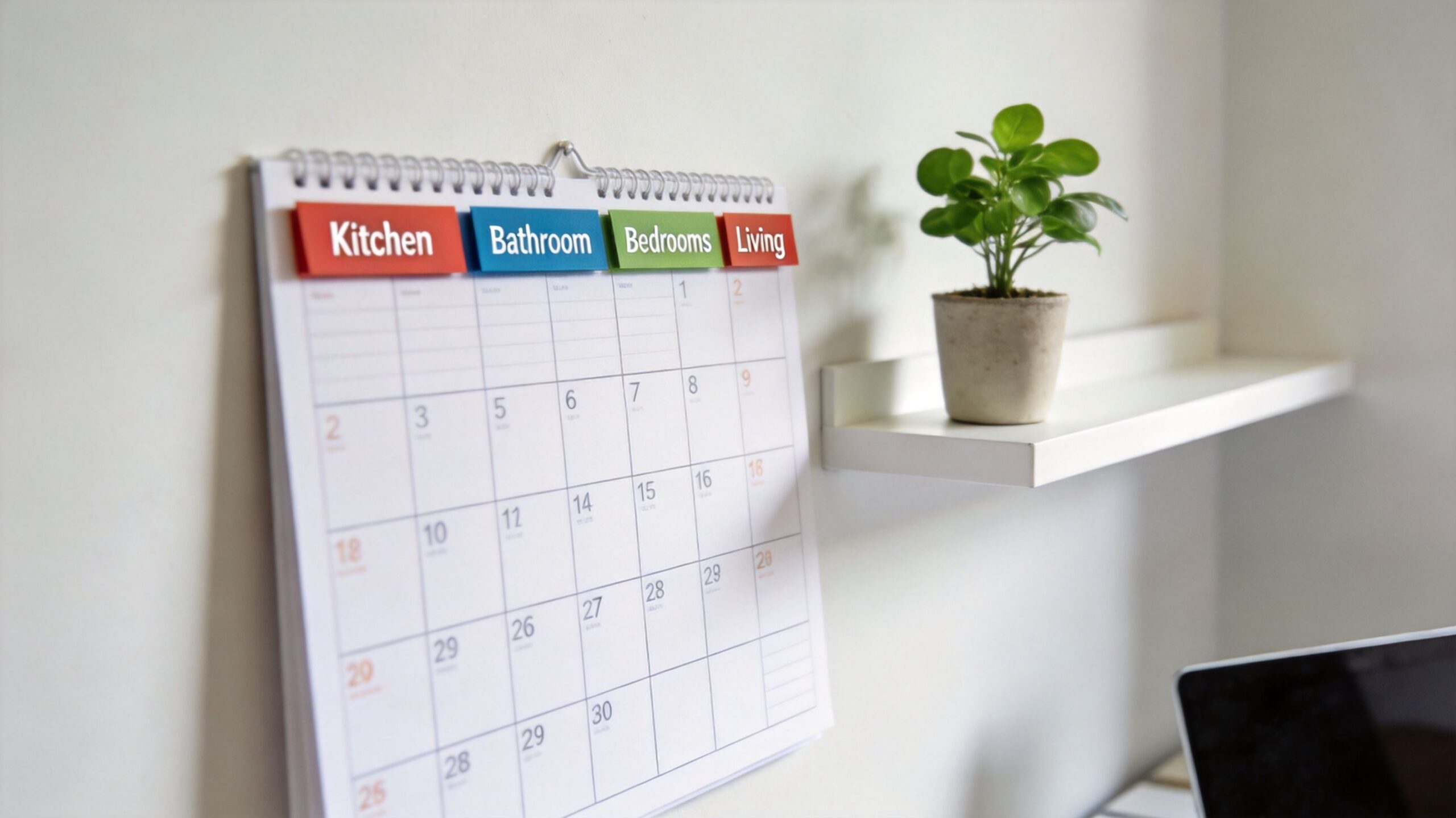
It is Tuesday evening, the bathroom feels sticky, the kitchen still has lunch crumbs on the counter, and sand is already collecting by the front door again. That is the moment a zone rotation earns its keep. You do not have to choose the top priority from five annoying options. The day already has a home.
For ADHD households, that reduction in decision-making matters as much as the cleaning itself. A zone system assigns one area to each day, so your brain is not trying to scan the whole house and rank every mess at once. In Palm Beach County, it also matches how homes get dirty. Bathrooms stay damp longer. Entry areas catch wet shoes, sand, and leaves during summer storms. Near the coast, salt film shows up on glass, metal, and sills faster than many people expect.
A Palm Beach version that stays realistic
A weekly rotation can stay simple:
- Monday: Kitchen and dining area
- Tuesday: Main bathroom
- Wednesday: Bedrooms
- Thursday: Living room and entry
- Friday: Floors and quick whole-home reset
The true value is consistency, not a perfect calendar.
If you have kids, pets, or short-term rental turnover, give floors more attention than a generic cleaning plan would. In South Florida homes, grit travels fast across tile and vinyl plank. Once sand gets into bedrooms and under furniture, the house feels dirtier than it is, which can make it harder to restart the next day.
The trade-off is straightforward. Zone rotation keeps the week manageable, but it will not catch every deep-clean detail on a fixed schedule. That is fine. Use the assigned day for maintenance-level work, then rotate in one heavier task only when there is enough energy for it. In a bathroom, that might be the shower glass or vent cover. In the living room, it might be wiping salt residue from window sills or cleaning around the slider track.
I recommend matching each zone to the surfaces that cause the most friction in your home, not the ones that look good on a printable chart. A West Palm condo near the water may need more attention on glass and fixtures. A family home in Boynton Beach may need a stronger entryway routine because of sports gear, mulch, and rain. The system works best when it reflects your actual mess pattern.
If a zone keeps getting skipped week after week, reduce the standard for that room. Ten focused minutes still count. If the rotation is working but the home never quite feels caught up, that usually points to buildup underneath the routine. At that stage, bringing in a local company like Sunset Shine can be the smarter move. You keep the rotation for upkeep, and the heavier reset stops hanging over your head.
4. The Minimal Supplies & Visual Organization Method
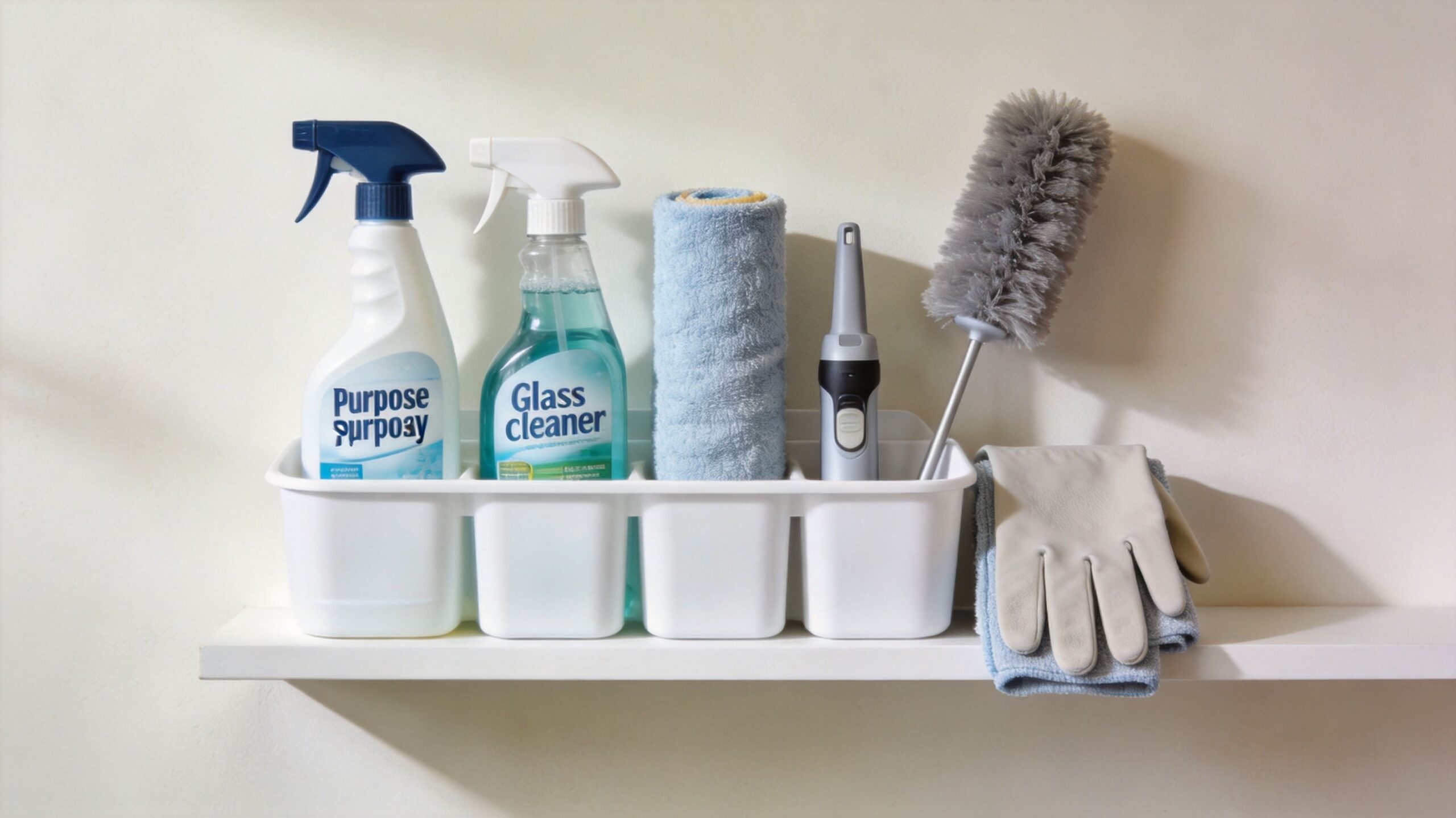
Too many products create another layer of indecision. If you have to hunt for the right spray, sponge, brush, and microfiber before you begin, your adhd cleaning list is already harder than it needs to be.
Most homes do better with a short, repeatable kit. Especially in South Florida, where you may need one bathroom product that handles soap scum and mildew-prone areas, one degreaser for the kitchen, and one general cleaner for the rest.
Keep one kit ready to move
A simple caddy beats a cabinet full of half-used bottles. Keep it visible, stocked, and easy to grab.
- Use one multi-surface cleaner: Good for counters, tables, and most everyday wipe-downs.
- Keep one bathroom-specific product: Helpful for shower glass, sink buildup, and humid bathroom surfaces.
- Carry microfiber cloths: They work well on dust, mirrors, and coastal film on fixtures.
- Add one floor tool you use: Vacuum, stick vac, or mop. Not three different versions.
Fewer supplies means fewer decisions, and fewer decisions means you're more likely to start.
This is one place where local homes teach the lesson quickly. In Boca and Delray condos near the water, salt haze shows up on glass and metal surfaces. In family homes farther inland, rainy-season footprints and mud pile up at entryways. You don't need a product for every scenario. You need a few products you trust and can reach without thinking.
5. The Visual Environment Reset
Cleaning gets easier when there is less to move, sort, and decide about. That's especially true for ADHD. Visual clutter competes for attention, and a crowded surface can make even a basic wipe-down feel like a major project.
The fastest way to improve your adhd cleaning list is often to reduce what the list has to work around.
Less stuff changes the whole job
Start with flat surfaces. Kitchen counters, bathroom vanities, nightstands, coffee tables. If those areas hold piles of mail, half-used products, chargers, beach bags, and random decor, every cleaning task takes longer.
A reset can be basic:
- Clear what isn't used daily: Extra bottles, duplicate tools, old papers, empty packaging
- Group what stays: Put hair products together, coffee items together, pet items together
- Give loose items a home: Tray, bin, basket, drawer
- Leave breathing room: A partly empty surface is easier to maintain than a packed one
In Palm Beach County homes, this has another advantage. Less countertop clutter means less sticky pollen on neglected edges, less dust gathering around AC airflow, and fewer damp bathroom items trapping moisture.
If you're booking professional help, this step matters even more. Clearing surfaces before a cleaning visit gives the team access to what needs attention, which is one of the easiest ways to make a deep clean feel more complete.
6. The Habit Stacking & Anchor Routine Method
Not every cleaning task needs its own schedule. Some work better when attached to routines you already do on autopilot.
That could mean wiping the bathroom sink after brushing your teeth, clearing the kitchen during the coffee brew, or doing a two-minute floor pickup before bed. The task doesn't need to be impressive. It needs to be attached to something real.
Attach chores to what already happens
One reason this works is that it lowers the effort required to start. Instead of creating a brand-new cleaning event, you're borrowing momentum from something that already happens every day.
A few useful pairings for South Florida households:
- After showering: Wipe the mirror and sink before humidity settles on everything
- After dinner: Load dishes and wipe counters before crumbs and grease sit overnight
- Before bed: Pick up the bedroom floor so sand, lint, and pet hair don't spread
- When the AC kicks on and you're already up: Dust the nearest vent or sill
Short maintenance beats heroic catch-up cleaning.
This style also supports the daily reset approach many ADHD-specific systems use. Visible clutter off flat surfaces, dishes handled, bathroom sink wiped, and a quick floor pickup can keep the home from tipping into the kind of disorder that triggers total avoidance.
7. The Outsourcing & Professional Service Strategy
It is 5:30 p.m. in Palm Beach County. The floors already have sand on them again, the bathroom feels damp, and the kitchen is still sitting there after a long workday. For many people with ADHD, that is the exact point where a cleaning plan stops being useful and starts becoming one more unfinished task.
Outsourcing can be a practical part of an ADHD cleaning system. It reduces decisions, removes the startup barrier, and puts hard dates on work that keeps getting postponed. In South Florida, that matters even more because the house keeps collecting new mess. Humidity feeds mildew, salt air leaves film on surfaces, and tracked-in grit wears on floors fast.
When paying for help is the practical move
Paying for help makes sense when the actual problem is not knowing what to do. It is getting the work started, finishing it, and keeping it from piling up again while life keeps moving.
For home cleaning, recurring service adds outside structure. The appointment becomes the deadline. That can work better than relying on motivation, especially during busy seasons, after a move, during rental turnover, or when home tasks have already slipped past the point of a quick reset.
Professional help is often the better option for jobs that are easy to avoid and slow to catch up on:
- Humidity-heavy bathrooms: grout lines, shower corners, mirrors, sink buildup, damp dust on baseboards
- Coastal homes: salt film on fixtures, smudged glass, sticky window tracks, residue on doors and hardware
- Short-term rental turnovers: fast kitchen and bathroom resets, linen changes, visible surface checks, floor cleanup
- Move-out and make-ready cleaning: inside appliances, cabinets, trim, blinds, floors, and detail work that affects deposit returns or listing photos
I see this often in West Palm Beach move-out cleans. A bathroom can look acceptable from the doorway, then the missed work shows up fast under better light: buildup behind the faucet, grime in grout, dust stuck to damp baseboards, and hair caught around the toilet bolts. That is the kind of cleaning that drains time and attention, especially for someone already dealing with ADHD overload.
The trade-off is simple. Hiring help costs money. Waiting until the home is far past manageable usually costs more in time, stress, and recovery effort.
For many Palm Beach County households, the smartest setup is hybrid. Keep a short daily list for dishes, clutter pickup, and laundry flow. Bring in a local company like Sunset Shine for recurring bathrooms, deeper kitchen work, rental turnovers, or move-out cleaning when the climate and the workload are doing too much at once.
7-Method ADHD Cleaning Comparison
A good ADHD cleaning list should help you choose a method fast, not leave you stuck comparing systems for another 20 minutes. In Palm Beach County, the best option also has to hold up against humidity, tracked-in sand, salt residue, and the kind of daily mess that builds quickly in busy homes, condos, and rentals.
Use the table below to match the method to your actual sticking point: getting started, staying consistent, reducing visual overload, or deciding when to bring in help.
| Method | 🔄 Implementation complexity | ⚡ Resource requirements | ⭐ Effectiveness / Quality | 📊 Expected outcomes / impact | 💡 Ideal use cases / key advantage |
|---|---|---|---|---|---|
| The Time-Boxing Method (Body Doubling with Timers) | Low to Medium, set timers and follow short work intervals | Minimal, timer or app, short breaks, optional body double | ⭐⭐⭐⭐, strong for starting and staying on task | Visible progress in small blocks, less overwhelm, easier re-entry after distractions | Best for short resets, dishes, laundry, and sand-heavy entry cleanup when urgency helps you act |
| Checklist-Based Simplified System | Low, build a simple step-by-step list once and reuse it | Minimal, printed list, laminated sheet, or phone app | ⭐⭐⭐⭐, high for clarity and follow-through | Fewer delays at the start, clearer definition of done, steadier maintenance | Ideal for people who freeze at the first step or skip parts of kitchen and bathroom cleaning |
| Zone Rotation System (One Zone Per Day) | Medium, assign spaces and give each one a set day | Moderate, calendar, zone supplies, 30-45 min/day | ⭐⭐⭐⭐, high for coverage and routine | Better weekly consistency, less whole-house pressure, more attention to one area at a time | Good for larger homes in Palm Beach County where bathrooms, floors, and outdoor entry areas need regular attention |
| Minimal Supplies & Visual Organization Method | Low, reduce tools and keep them visible | Low, basic kit, labeled caddy, easy-access storage | ⭐⭐⭐, solid for faster starts | Less friction before cleaning, less supply clutter, easier restocking | Best for ADHD households that lose momentum when products are scattered across cabinets and closets |
| Visual Environment Reset (Physical Space Reduction) | High, requires decluttering and reworking storage | High time and effort, bins, donation plan, possible extra help | ⭐⭐⭐⭐, strong long-term payoff | Less visual noise, shorter cleanups, easier surface maintenance | Useful when counters, bathroom ledges, and bedroom floors collect too much stuff to clean around easily |
| Habit Stacking & Anchor Routine Method | Low to Medium, attach small tasks to existing routines | Minimal, reminders, sticky notes, or visual prompts | ⭐⭐⭐⭐, very effective once the pattern sticks over 2-4 weeks | Small daily actions that prevent buildup, more automatic upkeep | Best for people who can handle 3-minute tasks after coffee, after showering, or before bed |
| Outsourcing & Professional Service Strategy | Low for the client, medium for choosing and scheduling a provider | High, recurring cost and appointment coordination | ⭐⭐⭐⭐⭐, highest for dependable results and reduced mental load | Cleaner baseline, fewer skipped deep-clean tasks, less executive-function drain | Ideal for busy professionals, parents, coastal homeowners, and rental properties where bathrooms, floors, and detail work fall behind fast |
No single method wins for every household.
Time-boxing and checklists are often the easiest place to start. Zone rotation works better when your home is large enough that trying to clean everything at once keeps failing. Visual reset and minimal-supplies systems take more setup, but they lower friction every day after that. Outsourcing costs more, yet it often saves the most attention, especially in South Florida homes where moisture and residue return quickly.
If you want the practical version, start with the lowest-friction method you will repeat. Then use professional help for the tasks that keep getting postponed or take too much energy to recover from.
The Smartest ADHD Cleaning Hack? Knowing When to Ask for Help.
Trying to keep up with AC dust, bathroom moisture, kitchen buildup, and sand from a beach day can feel endless. An adhd cleaning list can absolutely help, especially when it uses short time blocks, small checklists, zone rotation, and routines that fit your actual life instead of an ideal one.
But there are trade-offs. DIY systems work best when you have enough energy to start them and enough structure to return to them. They work less well when you're juggling work, kids, pets, travel, turnovers, or a home that already feels past the point of a quick reset.
That's when professional help stops feeling like a luxury and starts acting like infrastructure. A recurring clean gives you a baseline. A deep clean catches the bathroom grout, baseboards, vents, and cabinet exteriors that often get skipped. A move-out or Airbnb turnover clean handles the details that matter when someone else is about to inspect, rent, or review the space.
In Palm Beach County, local conditions matter. Humidity shows up fast in bathrooms. Salt air leaves residue on coastal surfaces. Tropical pollen settles on sills, and rainy season tracks mud through entry tile. Those aren't abstract cleaning problems. They're the exact reasons many residents decide that maintaining the home and protecting their own bandwidth are two different jobs.
If you're still managing it yourself, keep the list short and visible. If you've been stuck in the cycle of avoiding, binge-cleaning, and burning out, it may be time to get support and keep your energy for something else.
Book your cleaning with Sunset Shine Home Cleaning – your trusted house cleaning service in West Palm Beach. Call 561-408-4020 or book online – sunsetshinehomecleaning.com
If your adhd cleaning list keeps getting rewritten but the house still feels heavy, Sunset Shine Home Cleaning can take that load off. We serve West Palm Beach, Palm Beach Gardens, Jupiter, Juno Beach, North Palm Beach, Riviera Beach, Royal Palm Beach, Lake Worth, Boynton Beach, Delray Beach, Boca Raton, Wellington, Westlake, Loxahatchee, Loxahatchee Groves, and The Acreage with recurring, deep, move-in/move-out, post-construction, and Airbnb cleaning that fits real South Florida homes.