
Restore That Fresh, Clean Look to Your Florida Home
You glance down and see it. A line of dust, scuffs from sandy shoes, and maybe a few mystery marks along the baseboards. In South Florida, that clean edge where the wall meets the floor doesn't stay crisp for long. Humidity makes grime cling, open doors bring in grit, and homes around West Palm Beach and Palm Beach Gardens seem to collect fine dust faster than many homeowners expect.
The good news is that baseboards usually don't need complicated products or an all-day deep clean. Most of the easy ways to clean baseboards come down to matching the right method to the mess. Dry dust needs one approach. Scuffs need another. Deep buildup in humid rooms needs a little more care so you don't leave behind moisture.
These are the methods that work well in Florida homes, condos, rentals, and common areas. Some are best for quick weekly maintenance. Others are better when you're prepping for guests, a showing, or a seasonal reset. If you want that fresh, finished look back without making the job harder than it needs to be, start here.
Table of Contents
- 1. Microfiber Cloth and All-Purpose Cleaner Method
- 2. Vacuum with Brush Attachment Method
- 3. Magic Eraser Sponge for Scuffs and Stains
- 4. Steam Cleaner Method
- 5. Damp Cloth with Vinegar Solution Method
- 6. Baking Soda Paste for Deep Stains
- 7. Microfiber Mop Pad Method for Whole-Baseboard Coverage
- 7 Quick Baseboard Cleaning Methods Compared
- Keeping Your Baseboards Pristine A South Florida Maintenance Plan
1. Microfiber Cloth and All-Purpose Cleaner Method
If your baseboards look dull rather than heavily stained, this is usually the best place to start. A microfiber cloth grabs loose dust and light grime well, and it gives you more control than a sponge or a mop when you're working around painted trim, corners, and door casings.
In West Palm Beach homes, this is a reliable maintenance method because it handles the mix of fine dust, tracked-in sand, and everyday smudges without over-wetting the trim. The cloth should be damp, not dripping. Too much liquid can settle into seams, especially on older baseboards or spots where paint has cracked.
How to make it work
Spray your cleaner onto the cloth, not directly onto the baseboard. Then wipe from top to bottom, using one side of the cloth until it starts looking dirty and flipping to a clean side before you keep going.
A few habits make a big difference:
- Keep the cloth just damp: Wet trim takes longer to dry in Florida humidity and can leave streaks.
- Work in one direction: Start at one end of the room and keep moving so you don't miss sections.
- Use a second dry cloth if needed: This helps in bathrooms, laundry rooms, and near entryways where moisture hangs around longer.
Practical rule: If the cloth is leaving visible moisture behind, it's too wet for painted baseboards.
This method is also practical for weekly or biweekly upkeep in rental turnovers and HOA common spaces because it's fast and low-mess. At Sunset Shine Home Cleaning, microfiber is part of the standard toolkit for routine detailing because it cleans well without needing heavy product. If you wash your cloths at home, keep them separate from lint-heavy laundry so they stay effective. Sunset Shine has a helpful post on how washing sheets and towels affects cleaning fabrics.
2. Vacuum with Brush Attachment Method
After a rainy afternoon in West Palm Beach, baseboards near the patio door often collect a fine line of sand, pet hair, and gritty dust. A vacuum with a soft brush attachment handles that buildup fast and keeps you from rubbing that grit into the paint.
This is one of the most practical dry-cleaning methods for South Florida homes. It works well on tile-heavy interiors, along sliders, and in homes where the AC runs hard and still seems to pull dust into every edge. In humid weather, starting dry also helps. You remove loose debris first instead of turning it into a damp paste.
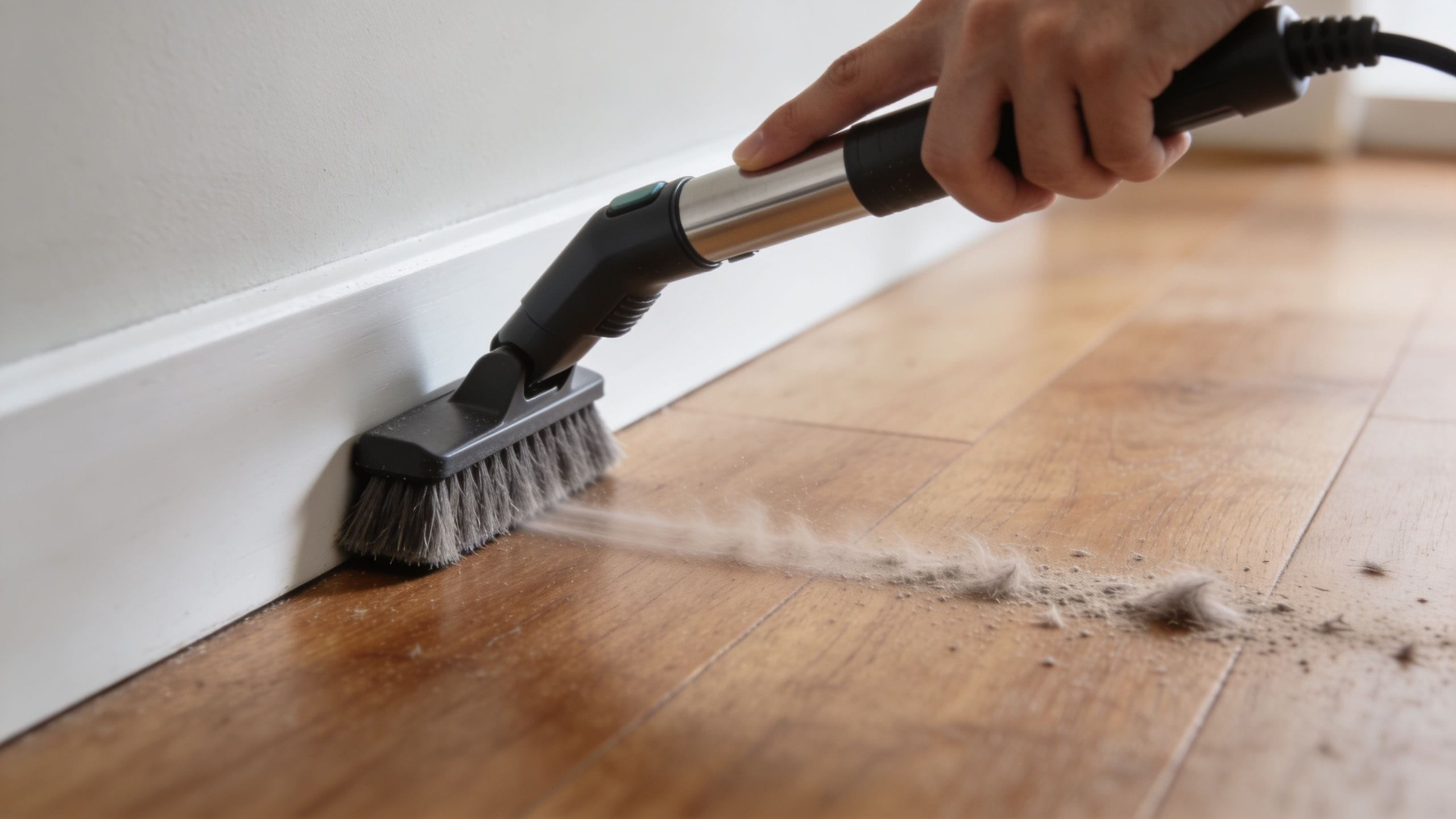
Use the brush attachment, not the bare plastic edge. A soft brush keeps better contact with flat trim and is less likely to leave scuffs on painted baseboards. If the brush head is dirty, clean it first. Otherwise you can transfer gray dust right back onto white trim.
A good routine is simple. Start in the corners where dust balls collect, then run the brush along the top edge and face of the baseboard in slow passes. In older Florida homes, pay attention to seams and profile grooves where moisture and dust can settle together. If you see any dark spotting that looks more like mildew than dust, stop there and switch to a method meant for that issue instead of brushing over it.
Best times to use it
This method earns its keep in a few common situations:
- Before any damp wiping: Dry removal keeps sand and dust from smearing.
- During weekly upkeep: It is quick enough for busy family homes, condos, and rentals between deeper cleans.
- Along entryways and patio doors: These are the first places I check in South Florida homes because tracked-in grit builds up fast.
- For anyone avoiding kneeling: A hose and brush attachment let you cover a lot of trim with less strain.
One practical pairing is fan dusting first, baseboards second. Dust falls, especially from ceiling fans and vents, so cleaning in that order saves repeat work. If you want a cleaner setup for that part of the routine, Sunset Shine shares a solid step-by-step guide on how to clean a fan without spreading dust around the room.
For regular maintenance, vacuuming is often enough to keep baseboards looking presentable. For homes with sticky residue, cooking film, or bathroom humidity buildup, it works better as the first pass before a more detailed clean. That is usually how we handle it at Sunset Shine Home Cleaning in West Palm Beach. Dry removal first, then targeted wiping only where it is actually needed.
3. Magic Eraser Sponge for Scuffs and Stains
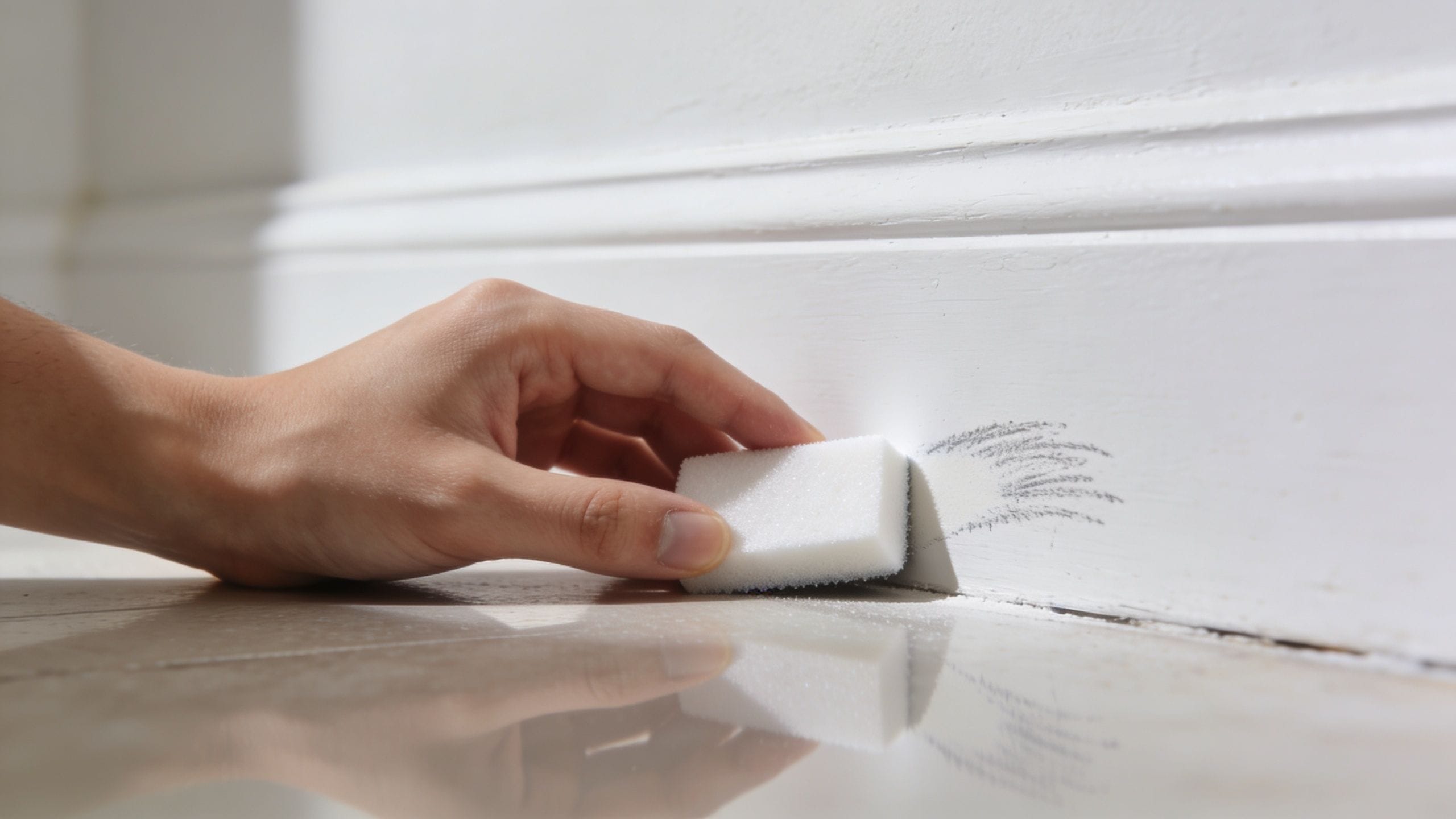
You finish the dusting, step back, and the baseboards still look dirty. In a lot of West Palm Beach homes, that last bit is not dust at all. It is black shoe scuffs, stroller marks, furniture rubs, and grime pressed into the paint by damp air and fine sand.
A Magic Eraser works well for that kind of mark because it abrades the surface lightly instead of just wiping over it. As noted earlier in the article, home-cleaning tests have found melamine sponges especially effective on scuffs after loose dirt is removed first. That matches what I see in South Florida houses. If the baseboards already feel clean but still look streaked or dingy, this is usually the fix.
Where people go wrong
Use the sponge barely damp. Too much water softens it and can leave extra moisture along the trim, which is not helpful in humid Florida rooms where paint edges and caulk lines already stay damp longer. Start with light pressure and check the sponge as you go.
Older paint is the trade-off here. Magic Erasers can remove the mark, but they can also dull a glossy finish or wear through cheap paint if you scrub the same spot too hard. I test behind a door stop or at the end of a wall first, especially in older condos and rentals near the coast where trim has been repainted several times.
Use it as a detail tool for spots like these:
- Doorways and hall corners: Common places for sandals, carts, and vacuums to leave black streaks.
- Near patio sliders: Sand under shoes acts like grit and leaves rub marks low on the trim.
- Move-out and listing prep: Baseboards may be dust-free but still show years of contact marks.
- Kids' rooms and pet areas: Toy bins, bowls, and little ride-on wheels hit the same sections again and again.
Use small circular passes first, then wipe with a clean cloth so you can see whether the mark is actually gone or if the paint is starting to thin.
For a full-house clean, this method is slow. It is best saved for visible problem spots after the easier dirt has already been handled. In larger homes around Palm Beach Gardens or West Palm Beach, that is often the point where homeowners decide to hand the detail work to a service like Sunset Shine Home Cleaning, especially before guests arrive, a showing, or a move-out inspection.
4. Steam Cleaner Method
Steam is useful when baseboards have more than dust on them. Think sticky buildup in a kitchen, residue after renovation work, or grime in a rental that hasn't had detailed cleaning in a while. A handheld steam cleaner loosens that film quickly, and when you wipe right after steaming, the dirt comes off with less scrubbing.
The catch in Florida is moisture control. Steam sounds dry, but it still leaves warmth and dampness behind. On painted baseboards, especially in humid rooms, you need a light touch and immediate wipe-downs so water doesn't sit along the trim.
A lot of homeowners use steam successfully in post-construction or move-out situations because it helps release fine debris from seams and textured spots. That's one reason cleaning crews often bring it into deep-clean jobs rather than weekly maintenance.
Smart steam habits in humid homes
Test a small area first, especially if the finish is older or the trim has visible gaps. Keep a microfiber cloth in your free hand so you can wipe loosened grime right away instead of letting it settle back down.
This walkthrough gives a good visual of the technique:
A few practical rules help:
- Use low pressure on painted trim: More steam isn't always better.
- Keep the nozzle moving: Holding it in one spot too long adds unnecessary moisture.
- Help the room dry out: Open windows if the weather allows, or run ventilation afterward.
Steam is effective, but it isn't the easiest option for every room. For regular upkeep, dry methods are simpler. For neglected baseboards or post-construction detail work, steam earns its place.
5. Damp Cloth with Vinegar Solution Method
If you prefer a simple, low-fragrance approach, vinegar and water can work well for everyday wipe-downs. This method is popular with homeowners who want a straightforward cleaner for painted trim, vinyl baseboards, and utility areas where grime is more important than cosmetic perfection.
The key is keeping expectations realistic. Vinegar is fine for cutting through light film and everyday residue, but it won't outperform a Magic Eraser on deep scuffs. It also isn't something I'd use blindly on every stained wood surface without testing first.
Good fit for maintenance, not every problem
A damp cloth with a mild vinegar mix makes sense in homes that get frequent touch-ups. You can use it in laundry rooms, along less formal hallways, and in condos where regular air-conditioning still leaves dust clinging at floor level.
For best results:
- Apply the solution to the cloth: Don't spray directly onto trim.
- Wipe in overlapping passes: This helps avoid missed lines and streaks.
- Dry as you go in humid rooms: Bathrooms and kitchens need extra attention.
One thing Florida homeowners notice quickly is that odor lingers more when the air feels still. Open a window or keep air moving if the smell bothers you. In occupied homes with children, pets, or frequent guests, this is a practical maintenance method, but it won't replace stronger spot-cleaning for marks caused by luggage, shoes, or furniture.
A vinegar wipe-down is most useful when the baseboards are dusty and slightly grimy, not heavily scuffed.
6. Baking Soda Paste for Deep Stains
Baking soda paste is for the marks that survive the easier methods. If you have dried-on residue, mystery spots near entryways, or old splatter near kitchen and dining areas, a mild paste can give you more bite without jumping straight to a harsher product.
This is one of those methods that works best in small targeted areas. It takes longer, and if you spread it over an entire room of trim, you'll spend more time wiping away residue than cleaning.
Where it earns the extra effort
Mix a thick paste and apply it only where you need it. Let it sit briefly, then use a soft cloth or a soft-bristled brush with light pressure. After that, wipe thoroughly with a damp microfiber cloth so you don't leave a chalky film in the grooves.
Good uses include:
- Entry scuffs mixed with sand residue: Common near front doors and sliders.
- Old spots in rentals: Especially where furniture sat against the wall.
- Post-project cleanup: Small dried paint or caulk traces that need patience more than force.
The trade-off is cleanup. Baking soda can settle into corners and profiles if you use too much. On detailed trim, that means extra passes with a cloth or cotton swab. If you're already dealing with a broader deep-cleaning job, it helps to group this with other detail tasks. Sunset Shine often writes about practical odor and residue cleanup too, including this article on getting stubborn oil smells out of fabrics, which reflects the same approach of using the right method for the right mess.
Don't scrub hard just because the stain looks stubborn. Let the paste do the work first, then increase pressure only if the finish can handle it.
7. Microfiber Mop Pad Method for Whole-Baseboard Coverage
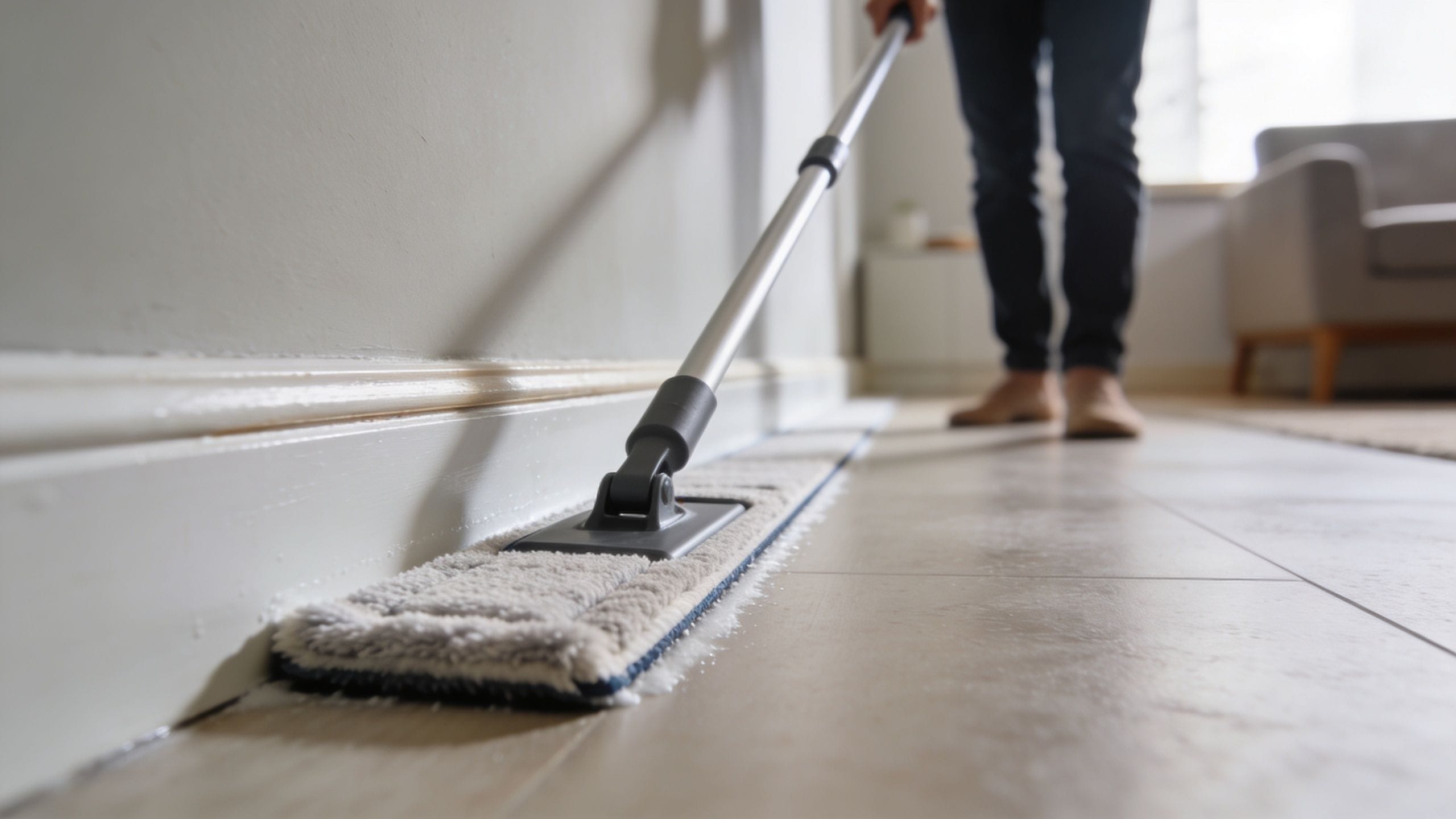
By the time a West Palm Beach homeowner notices the baseboards, the buildup usually runs the full length of the room. Fine sand near the entry, sticky dust from the AC, and a little mildew spotting in humid corners all add up fast. A microfiber mop pad helps you clean that long stretch without spending half the job crouched over tile.
Best use for this method
This method fits maintenance cleaning, especially in homes with open layouts, long hallways, and a lot of hard flooring. It is also a practical option for anyone who wants less bending and fewer stop-and-start passes.
The key is using it after loose debris is gone. If sand is still sitting along the trim, the pad can drag it across the paint and leave faint scratch marks. In South Florida homes, that matters more than people expect because tracked-in grit from patios, pool decks, and beach runs is common.
A few adjustments make the mop pad work better on baseboards:
- Use a clean pad reserved for trim: Floor residue, grease, and dark grout soil can transfer onto white baseboards.
- Mist the pad lightly, not heavily: Too much moisture can leave drip lines and can sit too long in seams or caulked edges in humid rooms.
- Work in one direction: That picks up dust more cleanly and keeps you from smearing grime back over the same section.
- Switch to a hand cloth for corners and profiles: Mop pads are fast on flat runs, but they miss tight detail around door casings and decorative trim.
I recommend this method for weekly or every-other-week upkeep, not for neglected baseboards with heavy scuffs or old grime. It saves time, covers a lot of footage quickly, and helps busy households stay ahead of buildup before it turns into a scrub-heavy job.
For condos, rental turns, and larger homes in West Palm Beach, this is often the method that keeps baseboards on the routine instead of on the deep-cleaning list. If the trim already has mildew specks, greasy residue, or months of dust packed into corners, that is usually the point where a professional service like Sunset Shine Home Cleaning makes more sense than trying to force a mop pad to do detail work it was never meant to handle.
7 Quick Baseboard Cleaning Methods Compared
| Method | 🔄 Implementation Complexity | ⚡ Speed / Efficiency | ⭐ Expected Effectiveness | 📊 Resource Requirements | 💡 Ideal Use Cases & Key Advantages |
|---|---|---|---|---|---|
| Microfiber Cloth and All-Purpose Cleaner Method | Low, simple wipe technique; minimal training | Fast (5–10 min avg), covers areas quickly | ⭐⭐⭐⭐, excellent for dust/grime; may need repeat for stubborn stains | Low upfront ($15–30); reusable cloths + eco cleaner | Great for routine maintenance, child/pet homes; minimal chemicals; tip: dampen (not saturate) and flip cloth sides |
| Vacuum with Brush Attachment Method | Low, plug-and-play with attachment | Very fast (3–7 min avg), quickest for dust removal | ⭐⭐⭐, very effective for dry dust/pet hair, not sticky residue | No extra cost if you have a vacuum; needs brush/UPHOL attachment | Ideal weekly preventive cleaning and allergy-prone homes; tip: use brush head parallel to baseboard |
| Magic Eraser Sponge for Scuffs and Stains | Low–Medium, simple but requires careful pressure | Very fast for spots (2–5 min per area) | ⭐⭐⭐⭐, highly effective on scuffs and marks, spot treatment only | Very cheap ($1–3 per eraser); minimal water | Best for targeted scuffs, move-in/move-out touch-ups; tip: test inconspicuous area and use light pressure |
| Steam Cleaner Method | Medium–High, equipment handling and safety considerations | Moderate (10–15 min avg + heat-up time) | ⭐⭐⭐⭐⭐, deep cleaning and sanitization, removes ingrained grime | Medium–high investment ($150–400) + electricity/water | Excellent for deep-clean, post-construction, mold-prone climates; tip: test finishes and wipe immediately with microfiber |
| Damp Cloth with Vinegar Solution Method | Low, simple mixing and wiping | Fast (5–10 min avg) | ⭐⭐⭐, good for light grease and deodorizing; less for heavy grime | Very low cost (<$1 per cleaning); vinegar + cloth | Eco-friendly maintenance, sensitive households; tip: dilute 1:3 (vinegar:water), avoid natural wood finishes |
| Baking Soda Paste for Deep Stains | Medium, mixing and targeted scrubbing needed | Moderate (10–15 min for problem areas) | ⭐⭐⭐⭐, effective on stubborn stains and scuffs | Very low cost (<$1 per application); baking soda, cloth/brush | Best for stubborn marks and post-construction spots; tip: mix ~3:1 soda:water, rinse residue thoroughly |
| Microfiber Mop Pad Method for Whole-Baseboard Coverage | Low–Medium, setup/coordination with mop system | Efficient (8–12 min avg), cleans floors and baseboards together | ⭐⭐⭐⭐, strong for general coverage; may miss tight corners | Medium initial ($40–80) for mop + washable pads | Ideal for large homes/commercial maintenance to save time and reduce bending; tip: use separate pads for floors vs. baseboards and launder after use |
Keeping Your Baseboards Pristine A South Florida Maintenance Plan
The best cleaning method depends on what your baseboards are dealing with most often. In Palm Beach County homes, that's usually a mix of dust, tracked-in sand, humidity, and occasional scuffs. If you wait until the trim looks obviously dirty, the job gets slower and more frustrating. A light routine works better.
For painted baseboards, a weekly dry pass with the vacuum brush method is usually enough to stay ahead of dust. Then use a damp microfiber cloth every month or so to remove the light film that builds up near kitchens, hallways, and entry points. If marks start showing, spot-treat them with a Magic Eraser instead of redoing the whole room by hand.
Stained wood needs a gentler approach. Keep moisture low, dust first, and test any cleaner before using it along a visible wall. Vinyl baseboards are more forgiving, which makes them easier to wipe down in laundry rooms, garages, and high-traffic utility spaces.
A practical schedule for most South Florida homes looks like this:
- Every 1 to 2 weeks: Dry dust or vacuum the baseboards.
- Every 1 to 2 months: Do a fuller wipe-down based on the finish and the room.
- As needed: Use targeted tools for scuffs, sticky residue, or deep stains.
The main thing is not letting moisture sit. In Florida, even simple cleaning jobs need enough airflow to dry properly, especially in bathrooms, kitchens, and ground-floor rooms that already feel damp.
When to call in the experts? If your baseboards are part of a bigger cleaning challenge, or you'd rather spend your weekend enjoying the West Palm Beach waterfront, it's time to call Sunset Shine Home Cleaning. Their deep cleaning service includes hand detailing baseboards, which can make sense before starting recurring service or when you're preparing for guests, a move, or a property showing.
If your trim hasn't had detailed attention in a long time, one thorough professional clean can reset the whole house. After that, regular maintenance is much easier to keep up with.
If you'd rather hand off the detail work, Sunset Shine Home Cleaning serves West Palm Beach and greater Palm Beach County with one-time and recurring cleaning services, including deep cleans that cover baseboards. Request a free quote and get help bringing the whole home back to a cleaner, fresher baseline.