
You generally shouldn't wash sheets and towels together. Towels produce 30 to 50% more lint per load, and when they're washed with sheets, that transfer can reduce sheet softness by 20 to 25% after 10 wash cycles.
A lot of people in West Palm Beach do it anyway because laundry piles up fast, especially in busy homes, condos, and vacation rentals. It feels efficient to throw everything in one load and move on. The problem is that this shortcut usually costs you softness, fabric life, and in South Florida's humidity, a cleaner result you can trust.
The bigger issue isn't just convenience versus perfection. Sheets and towels need different handling. Towels are heavier, rougher, and hold more moisture. Sheets are lighter, smoother, and more prone to tangling, pilling, and that annoying linty finish that makes a bed feel less fresh even when it's technically clean.
In Palm Beach County, humidity changes the conversation even more. Damp towels sitting too long, uneven drying, and cross-contact with bed linens can turn a simple mixed load into a mildew and hygiene problem. If you want linens that last and smell clean instead of just perfumed, it helps to separate them and wash each load the way the fabric needs.
Table of Contents
- The Common Laundry Mistake You Might Be Making
- Why Sheets and Towels Are Unhappy Laundry Partners
- The Professional Method for Washing Linens Separately
- When You Absolutely Must Wash Them Together
- A Special Note for West Palm Beach Homeowners
- Protect Your Linens and Reclaim Your Time
The Common Laundry Mistake You Might Be Making
The mistake isn't washing too often. It's washing unlike items together because they happen to live in the same linen closet.
Sheets and towels look compatible when they're folded on a shelf. Inside the washer, they're not. Towels are dense, textured, and abrasive compared with bedding. Sheets need room to move, rinse, and dry evenly. When those fabrics share a drum, the heavier load usually wins.
In real homes, this habit starts for a practical reason. One person strips the bed, grabs the bath towels, and wants to clear the hamper in a single cycle. That's understandable. It just doesn't work as well as people think, especially if you're trying to keep nicer cotton sheets smooth or prevent bath towels from turning stiff and musty.
Most laundry problems people blame on detergent are really sorting problems.
The other reason this mistake sticks around is that mixed loads don't always fail in an obvious way. Your sheets still come out looking clean. Your towels still feel dry enough. But over time, bedding loses that smooth finish, towels lose some loft, and everything starts taking longer to dry.
In South Florida homes, that's where the hassle shows up. If fabrics come out of the washer tangled or unevenly wet, they don't dry at the same pace. That's bad news in a climate where moisture hangs around. Even a load that smells fine at first can pick up that stale, humid-laundry smell later.
A simple rule keeps most of this from happening:
- Wash bedding with bedding: Keep fitted sheets, flat sheets, pillowcases, and lightweight blankets together.
- Wash towels with towels: Bath towels, hand towels, washcloths, and bath mats belong in their own group.
- Treat heavily used items separately: Gym towels, kitchen towels, and anything especially soiled shouldn't share a load with bed linens.
That one change makes the rest of laundry day easier. Settings make more sense, drying gets simpler, and your linens hold up better.
Why Sheets and Towels Are Unhappy Laundry Partners
The short version is simple. They fight each other in the wash.
They wear against each other
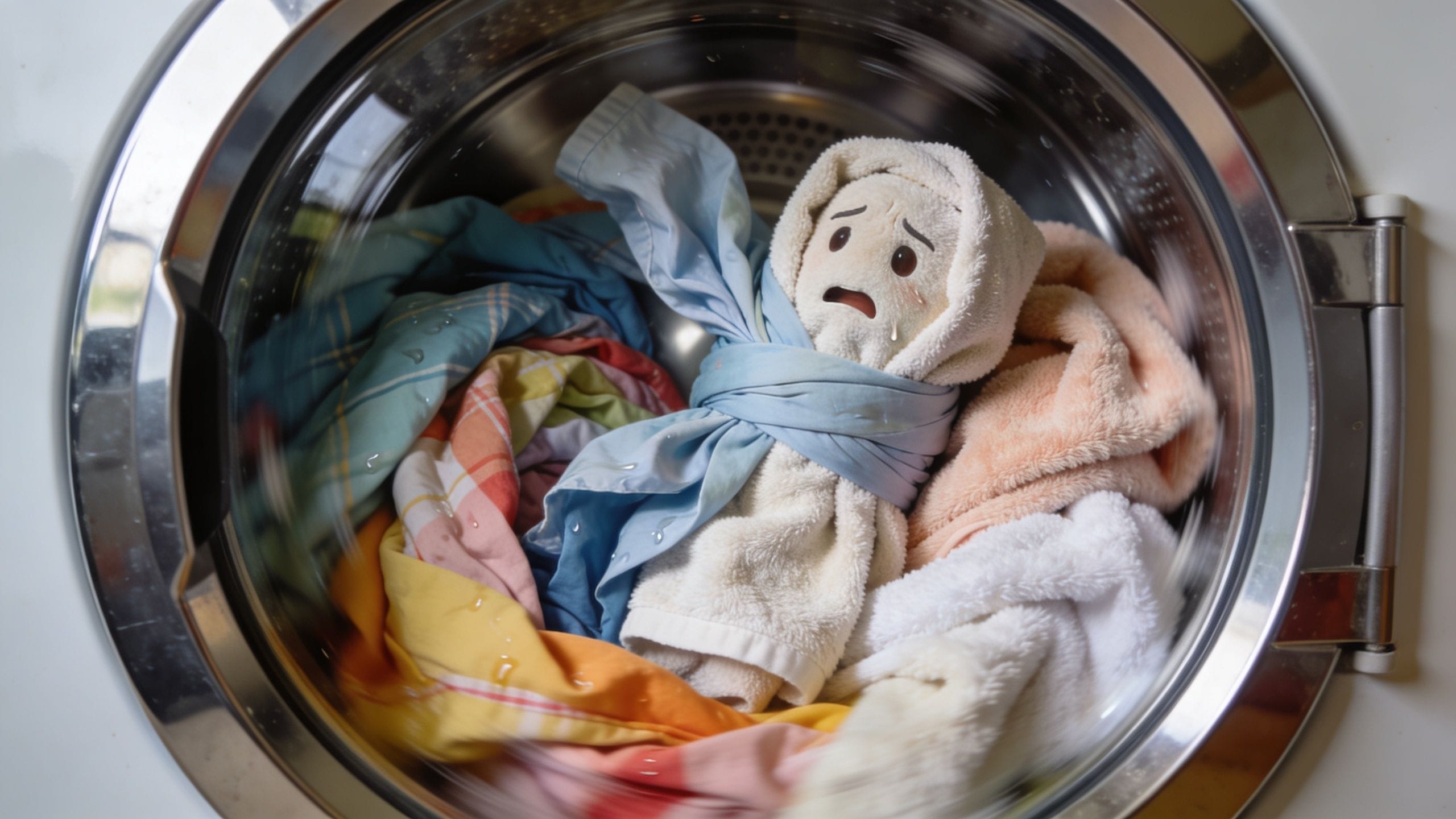
Towels are made to be absorbent, which is great in the bathroom and not so great in a washer full of sheets. Their looped terrycloth surface is rougher than percale, sateen, or other smooth bedding weaves. During agitation, that texture creates friction against the lighter fabric.
That friction is one reason professionals advise against mixed linen loads. It doesn't always cause visible damage after one wash, but it adds wear over time. Edges fuzz. Pillowcases start looking tired. Fitted sheets lose that clean, smooth feel people pay for.
Practical rule: If one item can scrub your skin dry, it can scrub your sheets in the washer too.
Lint is the other problem, and it's not minor. Towels' thick, looped terrycloth fibers generate up to 30 to 50% more lint per load than smoother sheet fabrics, and when those items are washed together, sheet softness can drop by 20 to 25% after 10 wash cycles, according to this laundry care analysis on lint transfer and abrasion testing.
If you're trying to get better results from routine laundry, Sunset Shine's laundry tips collection covers the kind of small habits that make fabrics last longer.
They need different wash conditions
Even if lint and friction didn't matter, sheets and towels still want different treatment. Towels need a more intensive wash because they hold body oils and stay damp longer after use. Sheets usually do better with gentler handling because preserving the fabric matters as much as removing everyday soil.
Here’s the basic mismatch:
| Item | Best priority | What goes wrong in a mixed load |
|---|---|---|
| Sheets | Smooth finish, lower wear, easier rinsing | They collect lint and get twisted around heavier items |
| Towels | Deep cleaning, full rinse, thorough drying | They stay bulked up and can trap lighter fabrics |
That mismatch gets worse in the dryer. Towels hold more moisture, so they often need more time. Sheets dry faster and can overdry while you wait for the towels to finish. That's how you end up with rougher bedding and towels that still don't feel as fresh as they should.
A lot of homeowners ask whether it's really that serious if the load is small. Sometimes the result is merely mediocre. But if your goal is long-lasting linens, a soft bed, and towels that stay absorbent, mixed loads work against you.
The Professional Method for Washing Linens Separately
This is the method that works best in homes, rentals, and regular weekly laundry. It isn't fussy. It just matches the fabric to the right settings.
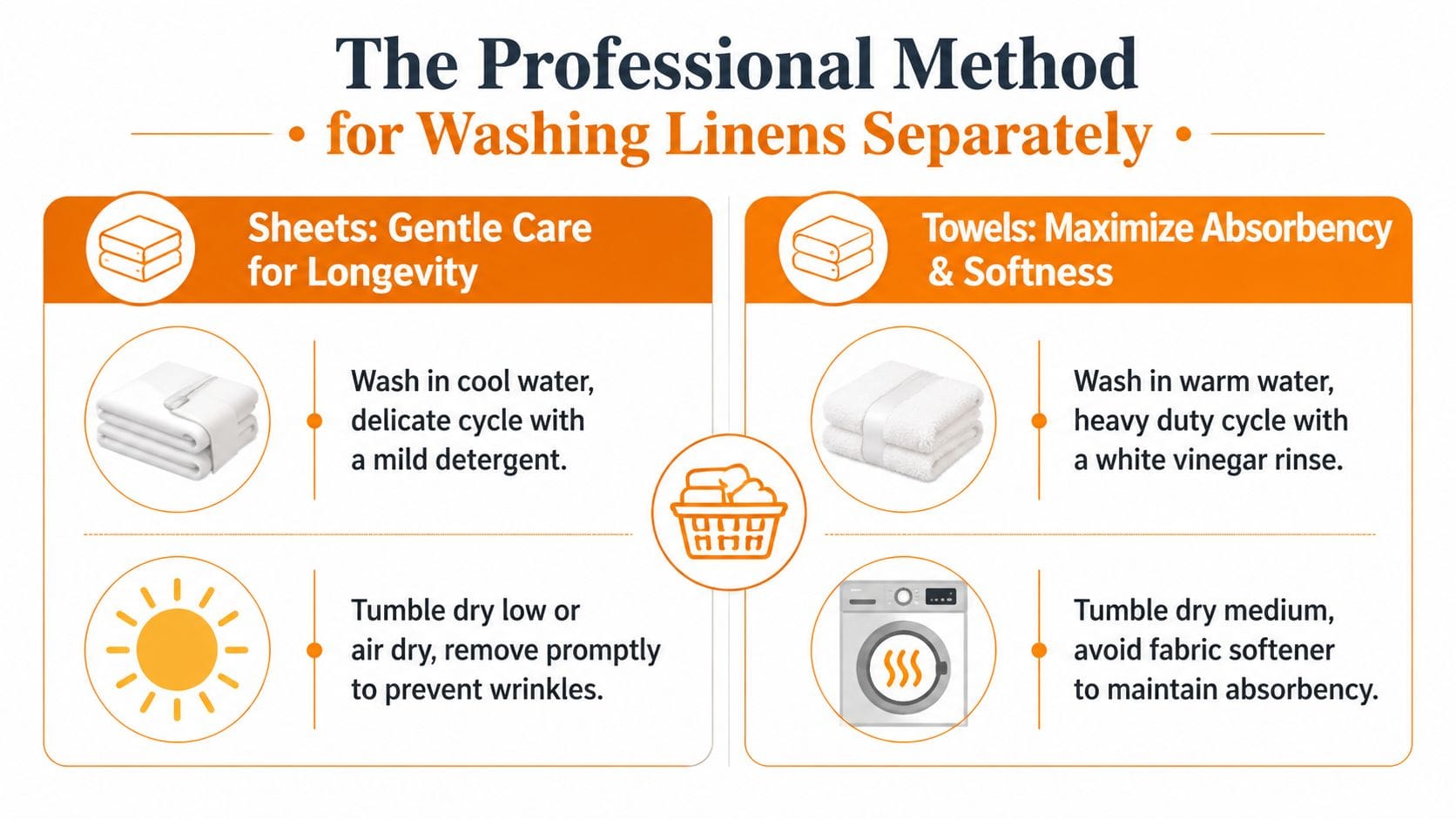
How to wash sheets
Start by grouping sheets with other bedding only. Keep whites with whites and colors with similar colors. If one pillowcase has face cream, makeup, or a spot near the edge, pre-treat that area before it goes in.
Use a warm water cycle for most sheets. That's the safer choice for cleaning without beating up the fabric. Guidance from this professional laundry method for sheets and towels notes that towels should be washed in hot water at 130°F+ to kill 99.9% of germs, while sheets benefit from warm water because hot cycles can cause 5 to 10% shrinkage in cotton fabrics.
A few practical choices matter here:
- Choose a mild detergent: Heavy detergent doesn't make sheets cleaner. It often leaves residue that makes fabric feel coated.
- Don't cram the drum: Bedding needs space to circulate so the corners and folds can rinse properly.
- Dry on low heat: Pull sheets out promptly so they don't overdry and start feeling papery.
This video shows the kind of laundry handling that helps fabrics come out cleaner and easier to manage:
How to wash towels
Towels need a different mindset. You're not just freshening fabric. You're clearing out moisture, body oils, and the stuff that builds up in a thick pile of cotton loops.
Wash towels in their own load. Pre-treat obvious stains first. Then use a hotter wash and a sturdier cycle than you would for bedding. Keep bath mats and heavy oversized towels in mind too. If the machine gets too packed, towels won't rinse or spin as well.
Towels should come out clean enough to dry fast, not just clean enough to smell like detergent.
For drying, medium heat usually works better than blasting them on the highest setting. You want them fully dry, but not scorched or coated with softener residue. Fabric softener can leave towels feeling slick while making them less absorbent.
Two habits that improve both loads
Some laundry improvements aren't about sheets or towels specifically. They're about machine behavior.
- Leave room for movement. Overstuffed loads don't tumble well, and bulky items wrap around lighter ones.
- Shake items before drying. Sheets unfold better, and towels dry more evenly when you loosen them first.
- Unload right away. In West Palm Beach, a forgotten load can smell off fast, especially in a closed laundry room.
If you follow those basics, you don't need anything fancy. Better sorting and better timing do most of the work.
When You Absolutely Must Wash Them Together
Sometimes you have one washer, limited time, guests arriving, and no interest in running two separate loads. In that case, the goal changes. You're not aiming for ideal care. You're trying to limit the damage.
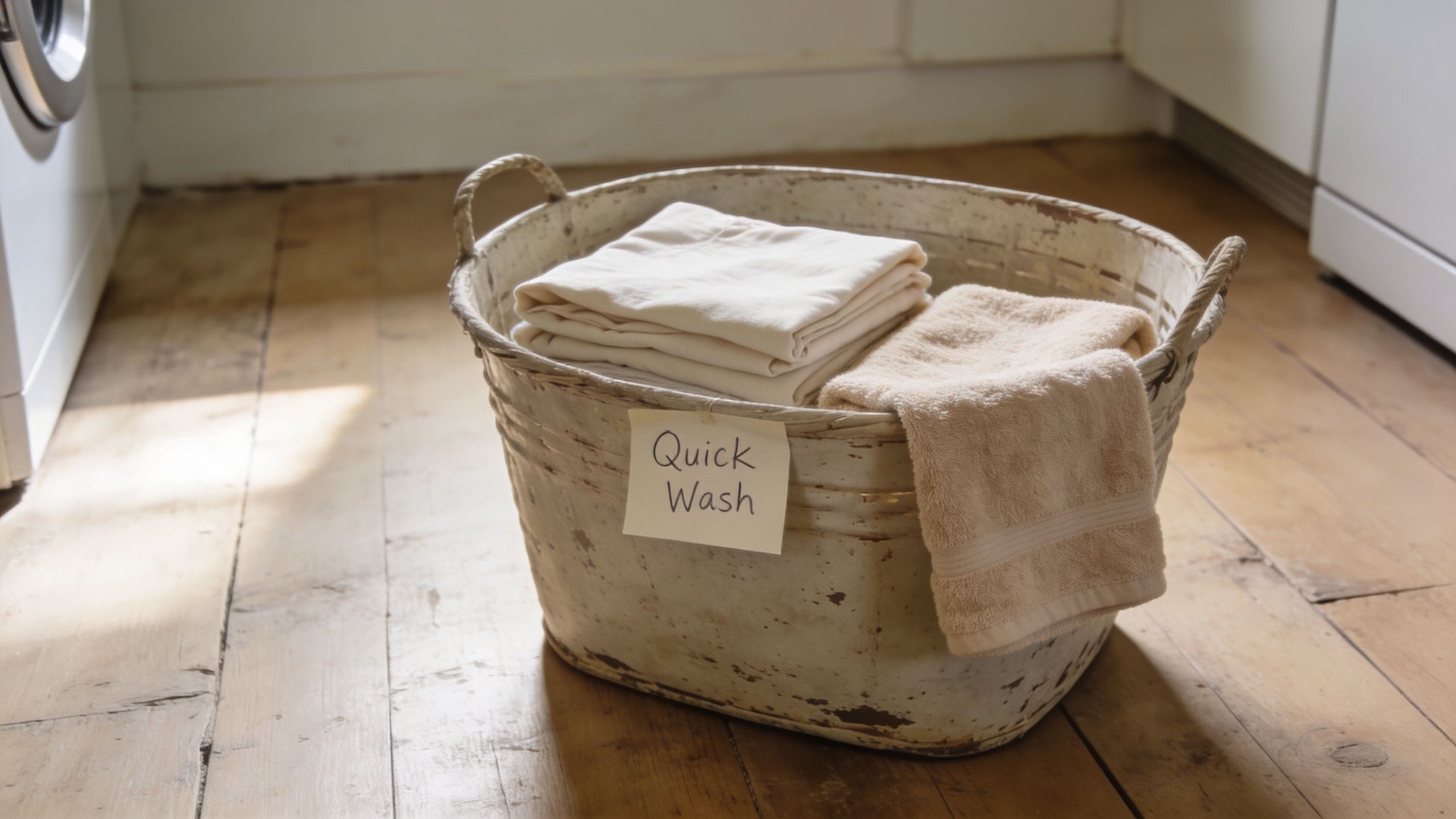
The trade-off you need to accept
If you have to wash sheets and towels together, the only workable temperature is a warm cycle at 100 to 120°F. The trade-off is hygiene. According to this mixed-load laundry guidance for combined washing, that warm compromise reduces germ-killing efficacy to around 70%, compared with 99.9% in the hotter wash recommended for towels.
So yes, you can combine them. No, it isn't the same result.
That compromise matters more if the towels are heavily used, gym-damp, or sitting in a laundry basket after a beach day. Around Palm Beach Gardens and the barrier island, that's not rare. Sand, sunscreen, humidity, and repeated reuse can make towels a rough partner for bedding.
A damage-control routine
If a mixed load is unavoidable, keep it small and selective.
- Choose lighter towels only: Don't mix sheets with bath mats or extra-thick bath towels.
- Use warm water: It's the middle ground, even though it doesn't fully sanitize towels.
- Run a normal cycle: Aggressive washing increases tangling and friction.
- Add an extra rinse if your machine allows it: That helps move out more lint and leftover detergent.
- Separate in the dryer if possible: Even if they were washed together, drying them apart gives you a better finish.
A mixed wash is survivable. A mixed wash and mixed dry is where most people lose the battle.
Also pay attention to color. New or richly dyed towels are risky around white sheets. If you're tempted to combine loads for convenience, at least don't make the convenience expensive.
For one-off situations, this approach is fine. As a routine habit, it usually creates more rewashing, more lint, and less comfortable bedding.
A Special Note for West Palm Beach Homeowners
Laundry advice written for dry climates misses something important. South Florida air changes the consequences of a mixed load.
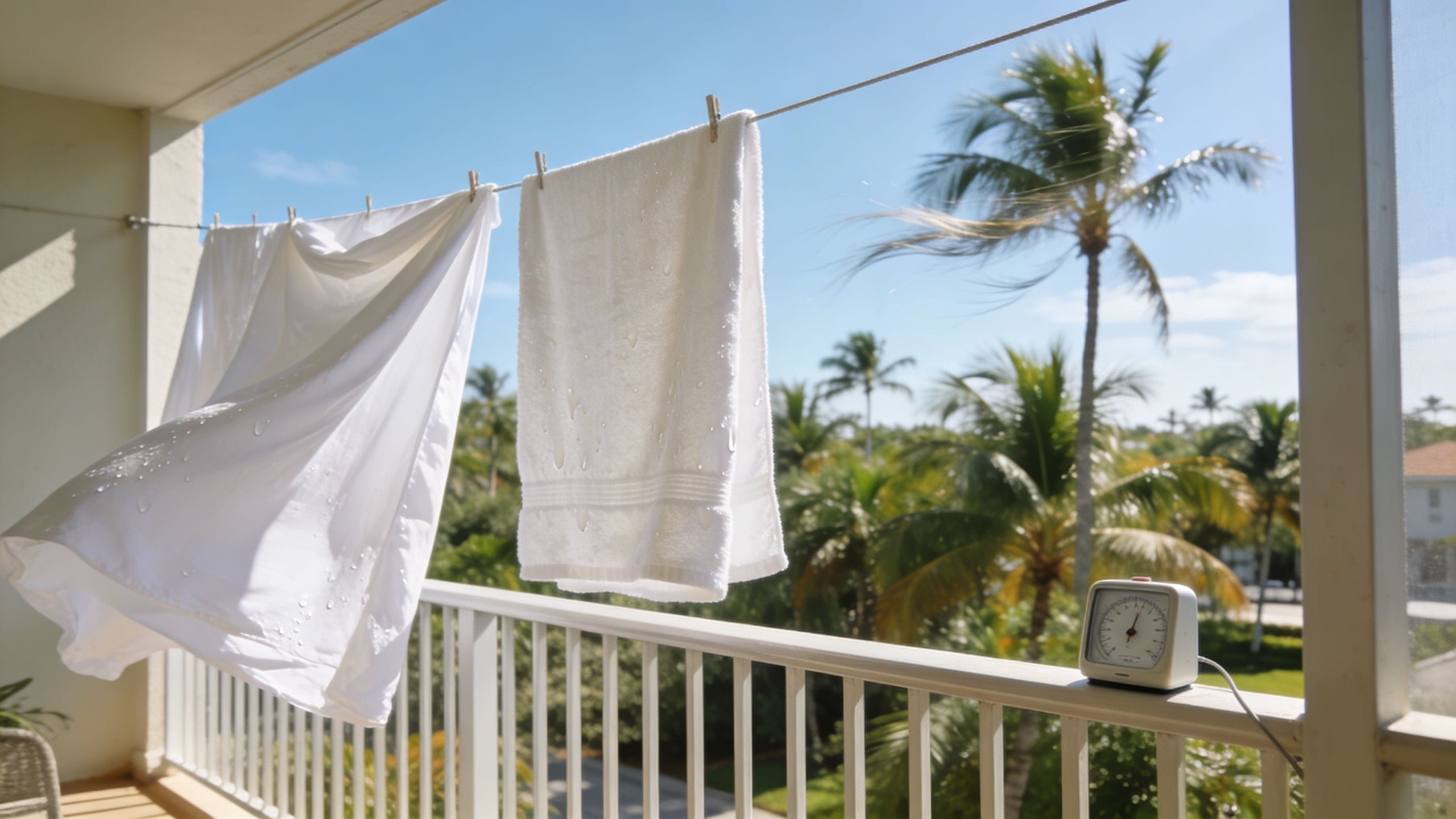
Humidity changes what happens after the wash
In West Palm Beach, it's common for indoor laundry areas, garages, and utility closets to stay warm and damp. That means a towel that comes out thicker and wetter than the rest of the load can hold moisture longer than you expect. If it's wrapped in sheets or left sitting in the washer, you're giving that dampness time to linger.
That matters because in humid climates like West Palm Beach, where relative humidity often exceeds 70%, bacterial transfer from towels to other items can increase by 40%, according to this article discussing laundry cross-contamination in humid conditions. That's a practical reason to keep bed linens and towels apart, especially for people with sensitive skin or anyone dealing with musty-smelling loads.
What local households should do differently
Local routines prove beneficial.
- Wash towels sooner than you think: Don't let damp bathroom towels pile up for days in a closed hamper.
- Move loads fast: In a humid house, washed laundry sitting in the machine can turn stale quickly.
- Prioritize airflow: Open the laundry room when possible, and don't leave tightly packed damp items in baskets.
- Separate beach and pool towels from bedding: In coastal homes, those towels carry a different kind of wear and moisture load.
If you're local and need help staying ahead of home care in this climate, Sunset Shine offers maid service in West Palm Beach designed for the way South Florida homes are used.
The biggest mistake I see in humid areas isn't dirty laundry. It's delayed laundry. The longer damp fabrics sit together, the less forgiving the load becomes.
Protect Your Linens and Reclaim Your Time
If you want the honest answer, don't wash sheets and towels together as a habit. It saves one step today and creates more wear, more lint, and more laundry frustration later.
Separating them isn't about being picky. It's a practical way to keep sheets smoother, keep towels cleaner, and avoid that damp, off smell that shows up fast in Palm Beach County homes. Better sorting also makes drying easier, and easier drying is a big deal in a humid climate.
A good laundry routine doesn't need to be complicated. Keep bedding together. Keep towels together. Use the right temperature for each. Pull everything out promptly. Those few choices do more for fabric life than most specialty products on the shelf.
If you're also dealing with odor issues in other fabrics, Sunset Shine's guide on how to get oil smell out of clothes is worth a read.
And if you're tired of spending your weekends catching up on laundry, cleaning, and turnover tasks, handing the home care side to professionals can make the whole house feel easier to manage.
If you'd rather spend your time enjoying West Palm Beach than sorting laundry and scrubbing bathrooms, Sunset Shine Home Cleaning can help. We provide reliable, eco-friendly home cleaning throughout Palm Beach County, with flexible scheduling and a 100% satisfaction guarantee, so your home stays fresh, comfortable, and ready for real life.
Generated with the Outrank app